Road rules, licensing, and vehicle regulations vary by country and state – always verify the requirements that apply where you drive before relying on this guidance.
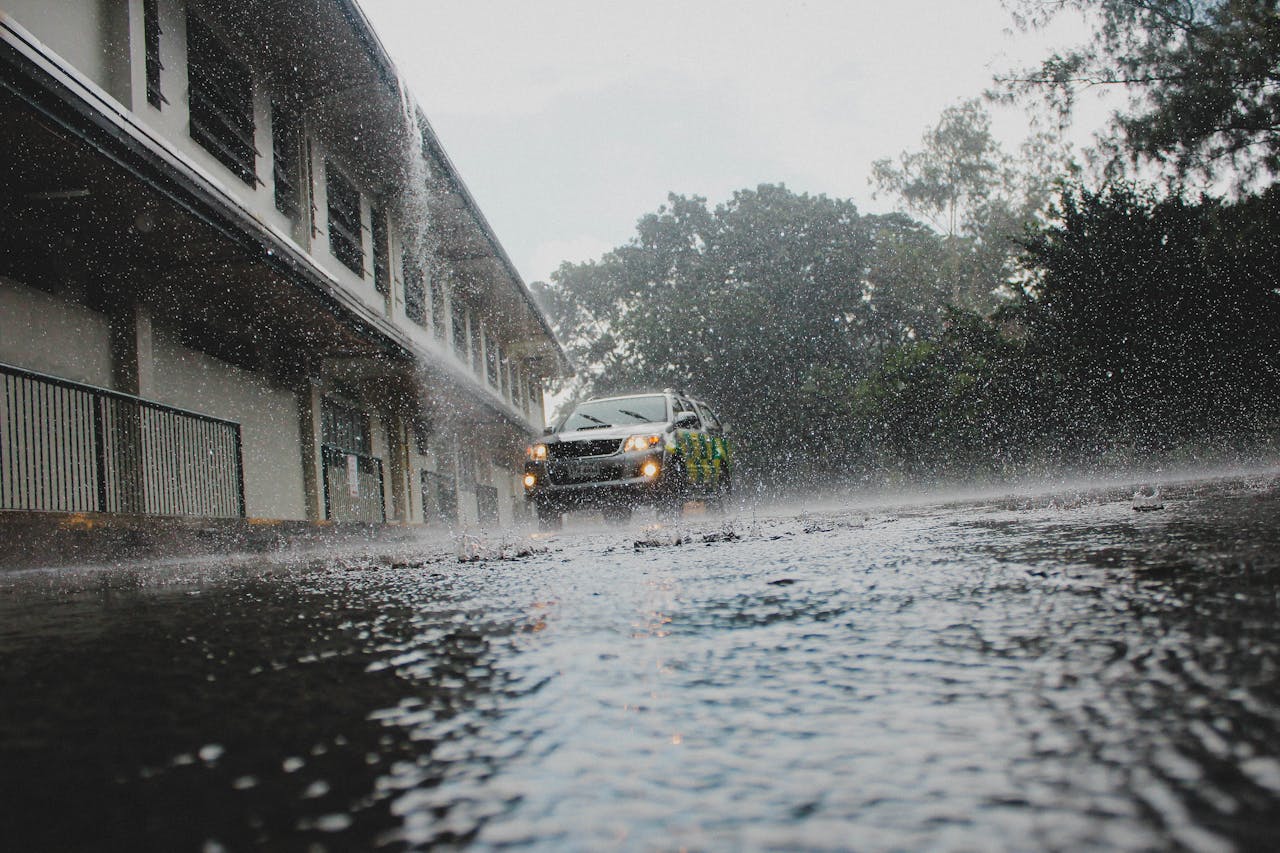
The most dangerous rain isn’t the heavy downpour but the first 10 minutes after rain starts. Imagine oil and rubber residue accumulated during dry weeks rise to the surface, creating a slick layer that’s worse than steady wet roads. Crash rates spike sharply during light rain following a dry spell. The tactics below are what advanced-driving instructors perform for wet-weather safety.
Before the trip
Check tire tread depth
Bald or near-bald tires hydroplane easily. Legal minimum is typically 1.6mm (UK/EU) or 2/32 inch (US), but wet-weather safety degrades significantly below 3-4mm. The penny test (US) or 20p coin test (UK) shows when replacement is overdue.
Verify wipers
Check the blades before the weather turns, not during it. Streaking, chattering or a smeared band across the glass means the rubber has hardened, and worn blades fail exactly when you most need them. Top up the washer fluid at the same time – road spray from trucks will empty it faster than you expect.
Defogger / climate setting
Know your AC/heat defogger setup before the windows fog. Briefly turn AC on with heat toward windshield, clears fog fastest in most cars.
On the road
1. Slow down meaningfully
Speed limits assume dry conditions. Wet roads cut available grip and lengthen stopping distance, so drop noticeably below the posted limit rather than shaving a few kilometres off it, and open up the gap to the vehicle ahead to give yourself time to react to what you cannot see.
2. Increase following distance to 4-5 seconds
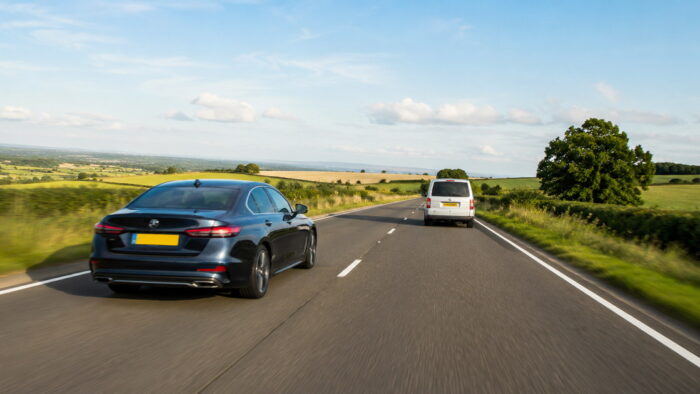
The 3-second rule for dry conditions becomes 4-5 seconds in rain, 6+ in heavy rain or low visibility.
3. Headlights on, even in daylight
Many jurisdictions require lights on whenever wipers are on. Daytime running lights only illuminate the front but your taillights stay dark. Drivers behind you need to see the back of your car.
4. Avoid standing water
Water deep enough to hide a curb edge can hydroplane your car or stall the engine. Drive around it or change route. 6 inches of moving water can sweep a small car off the road; 2 feet sweeps a truck.
5. Don’t brake if you hydroplane
Hydroplaning feels like the car floating. Ease off the accelerator, keep the wheel pointed straight, don’t brake hard. The car will regain traction within seconds. Braking or sharp steering during hydroplaning causes most rain-related crashes.
Highway driving
6. Stay in the middle lane when possible
Water pools at the road edges (the curb) and in the inner lane (banking). Middle lane often has the best traction.
7. Watch for spray from trucks
Heavy trucks throw enormous spray that can briefly blind you. Either pass quickly or hang back well behind them.
8. Don’t use cruise control
Cruise control increases hydroplaning risk because it maintains throttle when traction is lost. Disengage in any meaningful rain.
Visibility
9. Wipers on the right setting
Variable-speed wipers should adjust to rain intensity. Don’t leave them on high in light rain (smears) or low in heavy rain (overwhelmed).
10. Demist the rear window
Rear defoggers take 3-5 minutes to work. Turn on as you start the car in rainy conditions.
11. Clean the windshield interior
Greasy interior film causes glare and fog. Microfiber cloth with glass cleaner before the rainy season. The grease comes from off-gassing plastic interior, especially in new cars and summer heat.
Skids and recovery
Front-wheel skid (understeer)
Car keeps going straight when you steer. Ease off accelerator; do not brake hard. Don’t add more steering input. The front tires will regain grip.
Rear-wheel skid (oversteer)
Rear of car slides out. Steer gently in the direction the rear is sliding (right rear sliding left → steer left). Avoid braking.
All-wheel skid
Whole car sliding. Ease off everything (accelerator and brake). Keep wheels pointed where you want to go. Modern cars with stability control help significantly.
When to pull over
Pull off to a safe area if:
- Visibility is so reduced you can’t see car-lengths ahead
- Wipers can’t keep up with rain volume
- You feel hydroplaning on relatively flat roads
- You’re tired and conditions are deteriorating
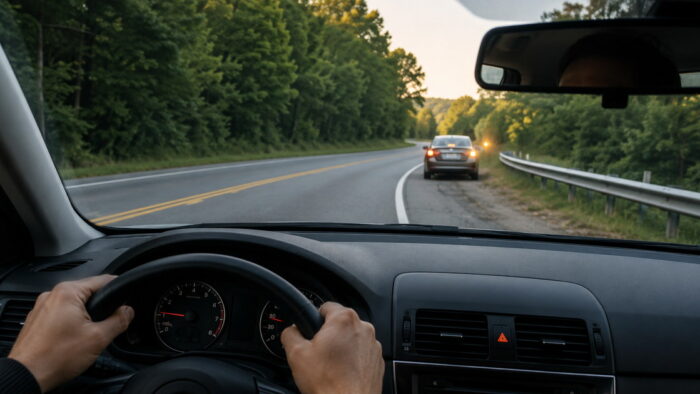
Don’t park on the highway shoulder for non-emergencies as drivers in heavy rain often drift toward stationary lights, creating crashes. Exit to a service station or rest area if possible.
Common rain-driving mistakes
- Using cruise control in rain. Disengage at the first drops.
- Following the dotted lines too closely. They’re often slicker than the asphalt itself.
- Driving through deep water at speed. Risks hydrolocking the engine and destroying it.
- Slamming brakes when hydroplaning. This is the worst possible response.
- Tailgating to see better. Reduces reaction time when the road needs it most.
Know when the weather has won
To summarize driving safely in heavy rain means slowing down meaningfully, following distance, headlights on, no cruise control, avoiding standing water, and no brake during hydroplaning. The first 10 minutes of any rain are the most dangerous , therefore slowing down helps during initial precipitation. Along with this, its important to check tires and wipers before wet-weather season. This is general guidance and verify specific traffic laws with your local DMV / DVLA / RTA.
Use conditions, not a fixed percentage, to choose speed
Replace wiper blades when they streak, chatter or leave areas uncleared, and use the owner manual for the correct type. In rain, slow progressively until the tires, visibility and following distance feel controlled. There is no single percentage that suits every road, tire and storm.
Keep reading
- Tire Maintenance Guide: Pressure, Tread, Rotation, Replacement
- Brake Inspection Checklist for Every Driver
- Road Trip Emergency Kit Checklist
Related guides
Sources and Further Reading
- NHTSA TireWise safety guidance
- The Highway Code: driving in adverse weather, rules 226-237 (UK)
- NHTSA TireWise
- NHTSA: Ten Tips for Safe Driving
Weather advice must be combined with local warnings, road closures and the vehicle manual; conditions on the day take priority.