Buying electric vans is the easy part. Charging a whole depot full of them overnight is the real project. Fleets that treat electrification as a vehicle-purchase decision alone are the ones caught out by grid limits and surprise energy bills. Planning the infrastructure first is what makes the switch work.
Why depot charging is different from home charging
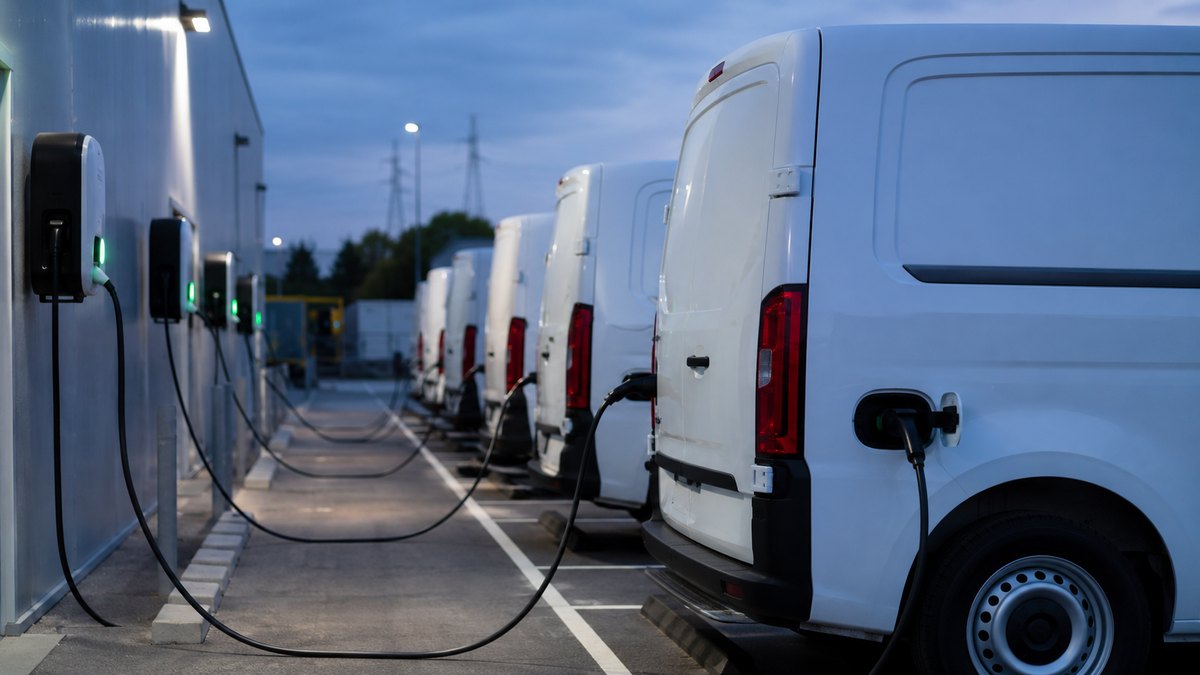
Charging one van overnight is trivial. Charging 20 or 50 vans in the same window can demand more electrical power than the site’s existing supply can deliver. The constraint is rarely the chargers themselves — it is the capacity of the grid connection into the depot and the way that power is managed across all the vehicles.
Step one: understand your grid connection
Before ordering hardware, find out how much power your site can draw and what an upgrade would cost and how long it would take. Utility grid upgrades can be the longest lead-time item in the whole project — sometimes many months — so engage the utility early. The Alternative Fuels Data Center run by the US Department of Energy (AFDC) and equivalent national bodies publish planning resources for exactly this stage.
Step two: control demand charges with smart charging
Commercial electricity bills often include a demand charge based on your highest peak of power use, not just total energy. If every van starts charging at 6pm, that peak — and the bill — spikes. Smart-charging software avoids this by:
- Staggering and sequencing charging across the night rather than all at once.
- Shifting charging to off-peak, cheaper tariff windows.
- Load-balancing the available power across all connected vehicles.
- Prioritising vehicles by their next departure time so the first vans out are ready first.
Matching chargers to the operation
| Operation | Typical approach |
|---|---|
| Vans return each evening, out each morning | Many lower-power AC chargers running overnight — cheapest and kindest to the battery |
| Multi-shift or quick turnaround | A smaller number of higher-power DC chargers for fast top-ups |
| Mixed fleet and duties | A blend, managed by smart-charging software to balance load |
Depot charging or public charging?
Relying on public chargers for a delivery fleet is usually a false economy: rates are higher, availability is unpredictable, and drivers lose paid time queuing. Depot charging gives you control over cost and timing, and pairs naturally with overnight, off-peak energy. Reserve public or en-route charging for exceptions — unusually long routes or a vehicle that could not complete its charge overnight. As a rule, size the depot so the daily duty cycle is covered on site, and treat public charging as a backstop rather than a plan.
Look after the batteries
Charging behaviour affects how long the expensive part of the van — its battery — lasts. Slower overnight AC charging is gentler than repeated high-power DC fast-charging, and most fleets do not need vans sitting at 100% for hours. Where the software allows, charge to a daily target rather than always to full, and let vehicles finish charging close to departure so they are not held full and warm overnight. These habits protect range and resale value across the fleet’s life.
Plan for growth
Install the underlying electrical capacity and cable runs for more chargers than you need today, even if you fit fewer units initially. Retrofitting trenching and switchgear later is far more expensive than provisioning for it up front. Successful electrification, in short, is an infrastructure project first and a vehicle-procurement project second.
Frequently asked questions
What is the hardest part of electrifying a van fleet?
Usually the grid connection. Charging many vehicles at once can exceed the site’s power supply, and utility upgrades can take months, so engage the utility before buying hardware.
What is a demand charge?
It is a part of a commercial electricity bill based on your peak power draw. Charging every van simultaneously creates a costly peak, which smart charging avoids by staggering and load-balancing.
Do I need fast DC chargers for a delivery depot?
Often not. If vans sit at the depot all night, many lower-power AC chargers are cheaper and better for battery life. Fast DC chargers make sense mainly for quick turnarounds or multi-shift operations.