A road trip can be one of the cheapest ways to travel or a surprisingly expensive one, and the difference is mostly in the planning. With a few deliberate choices around fuel, food, lodging and timing, you can stretch a budget a long way without making the trip feel like a sacrifice.
Cut fuel costs with how you drive
Fuel is often the biggest road-trip expense, and your driving style strongly affects it: smooth acceleration, steady speeds, and avoiding hard braking all improve economy, as our fuel-saving driving habits guide details. Keeping tyres correctly inflated, not carrying unnecessary weight, and removing an empty roof box all help too. These habits cost nothing and quietly save money over every mile of a long trip.
Plan fuel stops smartly
Beyond how you drive, where you fuel matters: prices vary, and motorway or remote stations are often dearer, so planning fuel stops and using apps that show prices can save a noticeable amount over a trip. Filling up before a long empty stretch rather than running to fumes also avoids being forced into an expensive station. A little route awareness turns fuel from an unpredictable cost into a managed one.
Save on food without living on snacks
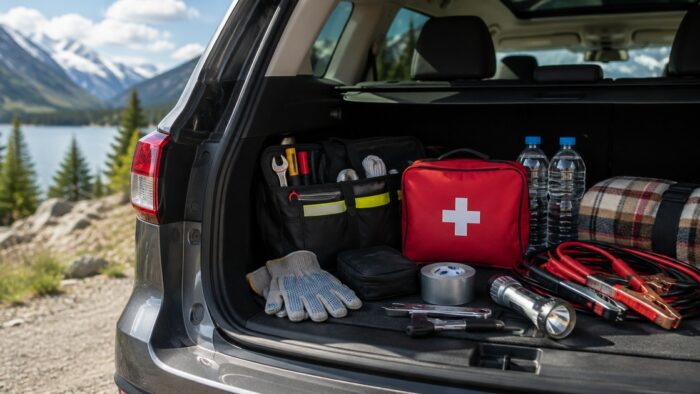
Food adds up fast when every meal is bought on the road, so packing a cooler with drinks, snacks and some meals cuts both cost and the temptation of pricey convenience stops. Mixing self-catered meals with the occasional sit-down treat keeps the budget and the morale healthy. Carrying water and refillable bottles is a small habit that saves money and is handy for the emergency kit too, as our emergency kit checklist notes.
Be strategic about lodging
Accommodation is the other big cost, and flexibility saves money: booking ahead for better rates, considering budget options, camping or splitting costs with travel companions, and avoiding peak-night premiums where you can. Staying slightly outside expensive tourist centres is often cheaper. For some trips, the right vehicle and setup even allow occasional overnight stays in the car at safe, permitted locations, though that needs care and is not for everyone.
Travel off-peak
When you travel affects the price of almost everything, so off-peak timing, avoiding holiday peaks and high season, generally means cheaper fuel demand, lodging and attractions, plus quieter roads. If your dates are flexible, shifting a trip out of the busiest periods can cut costs meaningfully and make the journey more pleasant. Building the trip around value timing is one of the easiest big savings available.
Don’t skimp where it costs you later
Saving money should never mean cutting corners that backfire, like skipping vehicle maintenance, driving dangerously tired to save on a night’s lodging, or ignoring the emergency kit. A breakdown or incident dwarfs any saving, so the prep in our multi-day road trip guide is part of a smart budget, not a luxury. The cheapest trip is the one that goes smoothly, so spend on the basics that prevent expensive problems.
Free and cheap experiences
Finally, much of what makes a road trip memorable is low-cost or free: scenic drives, viewpoints, parks, beaches, hikes and local sights. Planning a route around these, rather than only paid attractions, keeps the trip rich and the spending modest. With smart driving, planned fuel and food, flexible lodging and off-peak timing, a road trip can be both genuinely affordable and genuinely good, which is the whole point.
Budget road trip checklist
To save without sacrificing the trip:
- Drive smoothly and keep tyres inflated and the load light.
- Plan fuel stops and use price apps; avoid pricey remote stations.
- Pack food and water; mix self-catering with occasional treats.
- Book lodging ahead, stay flexible, and consider budget options.
- Travel off-peak, and never skimp on maintenance, rest or the emergency kit.
Tolls, parking and attraction passes
A few more costs are easy to trim with planning. Tolls add up on some routes, and navigation apps can often route you to avoid them if the time trade-off is acceptable, or you can budget for them deliberately rather than being surprised. Parking in cities can be expensive, so researching cheaper or free parking, or staying somewhere with parking included, saves money and stress. For attractions, look into passes or bundles that cover several sights for less than paying individually, and remember that many of the best road-trip experiences, scenic routes, parks, viewpoints and beaches, cost little or nothing, as noted above. Stacking these smaller savings on top of the bigger ones, fuel, food, lodging and off-peak timing, keeps the whole trip affordable. The throughline, as our road trip planning guide reflects, is that a little research before you go turns a potentially pricey trip into a genuinely economical one.
Sources
Costs and conditions vary by route and season. Prioritise safety and vehicle readiness; savings that compromise either rarely pay off.