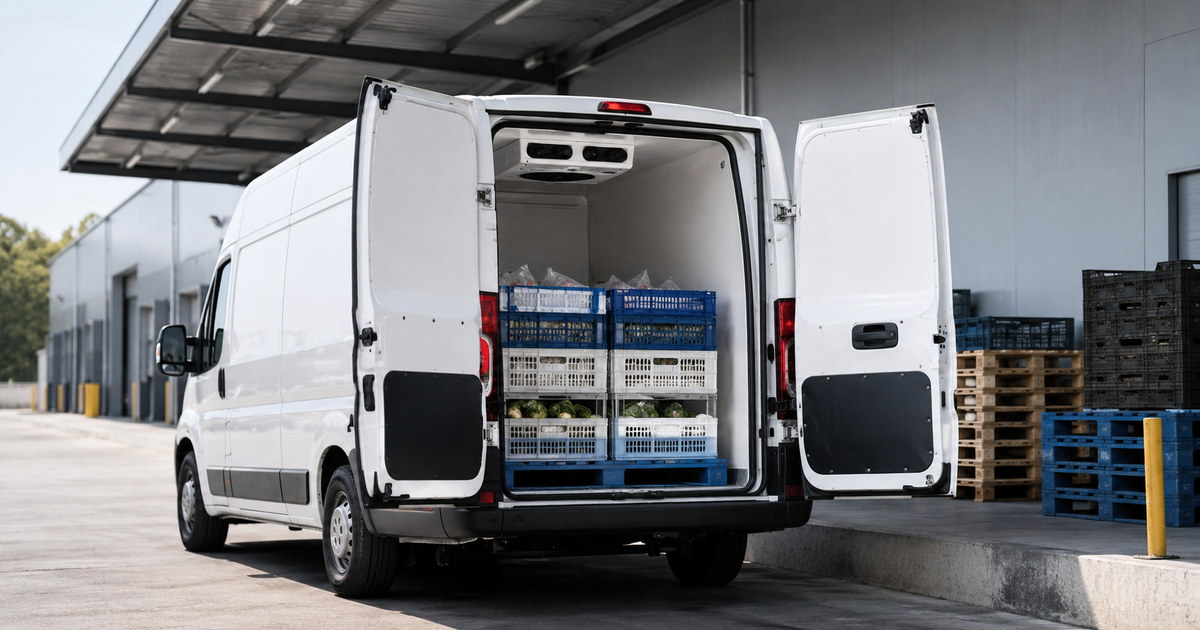
A refrigerated van lets a business move temperature-sensitive goods, food, pharmaceuticals, flowers, safely, and getting the cold chain right is both a quality and a legal matter. Understanding the basics helps you choose the right van and avoid costly spoilage or compliance problems.
What a refrigerated van is
A refrigerated van, sometimes called a reefer, has an insulated load area and a refrigeration unit that keeps the cargo within a set temperature range, rather than just being a normal van with a cool box. The insulation and the cooling system work together to hold temperature even as outside conditions change and doors open and close. That controlled environment is what makes it suitable for goods that would otherwise perish or become unsafe.
Chiller versus freezer
There is an important distinction between chilled and frozen capability. A chiller unit holds the load at refrigerator temperatures, suitable for fresh produce, dairy and many foods, while a freezer unit can hold deep-frozen temperatures for frozen goods. Some vans can do both or have multiple compartments at different temperatures. Matching the unit to what you actually carry is essential, since a chiller cannot keep goods frozen and over-cooling fresh produce can damage it.
Maintaining the cold chain
The cold chain is the unbroken temperature control from origin to destination, and breaking it, by letting goods warm up in transit, can spoil them or make them unsafe. Pre-cool the van before loading, minimise door-open time, load goods already at the right temperature, and avoid overloading in a way that blocks airflow. Monitoring and, where required, recording temperatures during transport proves the chain held, which matters for both quality and compliance.
Know the regulations
Transporting food and certain other goods is regulated, with requirements around hygiene, temperature control and sometimes record-keeping, designed to keep products safe. Businesses should understand the rules that apply to their cargo, such as food-transport hygiene and temperature requirements, and ensure their operation meets them. Treating compliance as part of the job, not an afterthought, protects customers and the business alike, complementing the loading discipline in our cargo van rental guide.
Maintenance is critical
A refrigeration unit that fails mid-journey can ruin an entire load, so maintenance is not optional. Keep the cooling unit serviced, check that it holds temperature reliably, ensure door seals are intact so cold air is not lost, and watch for any signs the unit is struggling. This sits alongside normal van upkeep, and the reliability stakes are higher than for a standard van, since a breakdown can mean spoiled, unsellable cargo and let-down customers.
Rent or buy?
Whether to rent or buy depends on how regularly you need refrigerated capacity. Occasional or seasonal needs may favour renting, avoiding the cost and maintenance of owning a specialist vehicle, while steady, ongoing demand may justify buying or a long-term arrangement, weighing total cost much as in our best vans for small businesses guide. Renting also lets you match the chiller or freezer specification to a particular job rather than committing to one configuration.
Choose the right specification
Before renting or buying, define what you carry, at what temperature, in what volume, and over what distances, then match the van’s capacity, temperature capability and any compartmentalisation to that. The right refrigerated van, properly maintained and operated with cold-chain discipline, lets a business move sensitive goods reliably and compliantly; the wrong one, or a broken chain, can mean spoiled stock and lost trust. The planning up front is what makes it pay.
Refrigerated van checklist
Before using a refrigerated van:
- Match the unit (chiller, freezer or both) to your actual cargo.
- Pre-cool the van and load goods already at temperature.
- Minimise door-open time and keep airflow clear; don’t overload.
- Understand and meet food-transport and temperature regulations.
- Keep the unit and door seals well maintained; monitor temperatures.
Running costs and standby power
Refrigerated vans carry extra running considerations beyond a standard van. The cooling unit consumes energy, whether drawn from the engine, a separate diesel unit, or electric standby power when parked, so fuel or energy use is higher and worth budgeting for. Some units offer electric standby, letting you keep the load cold while plugged in at a depot without idling the engine, which saves fuel and emissions during loading or overnight. The insulation and unit also add weight, slightly reducing payload, so factor that into loading within the van’s limits, as our van loading guidance would apply. Planning for the unit’s energy needs, keeping it serviced so it does not fail mid-load, and using standby power where available all keep a refrigerated operation both reliable and economical. These practicalities are part of choosing between renting for occasional needs and owning for steady demand, since ongoing running costs add up over time.
Sources
Food-transport and temperature regulations vary by product and jurisdiction. Confirm the rules that apply to your cargo and operation.