Road rules, licensing, and vehicle regulations vary by country and state – always verify the requirements that apply where you drive before relying on this guidance.
Accessible coach and bus travel is about making sure every passenger can board, ride and alight safely and with dignity, and planning for it from the start is what makes a trip truly inclusive. For group organisers, accessibility is not an add-on; it is part of getting the trip right for everyone.
Why accessibility matters
Passengers with mobility needs, wheelchair users, people with limited mobility, those travelling with mobility aids, have the same right to travel comfortably and safely as anyone else, and in many places this is also a legal requirement. Planning for accessibility ensures no one is excluded or left struggling, and it reflects basic good service. Treating it as central, rather than something to sort out on the day, is what makes group travel work for the whole group.
How accessible vehicles work
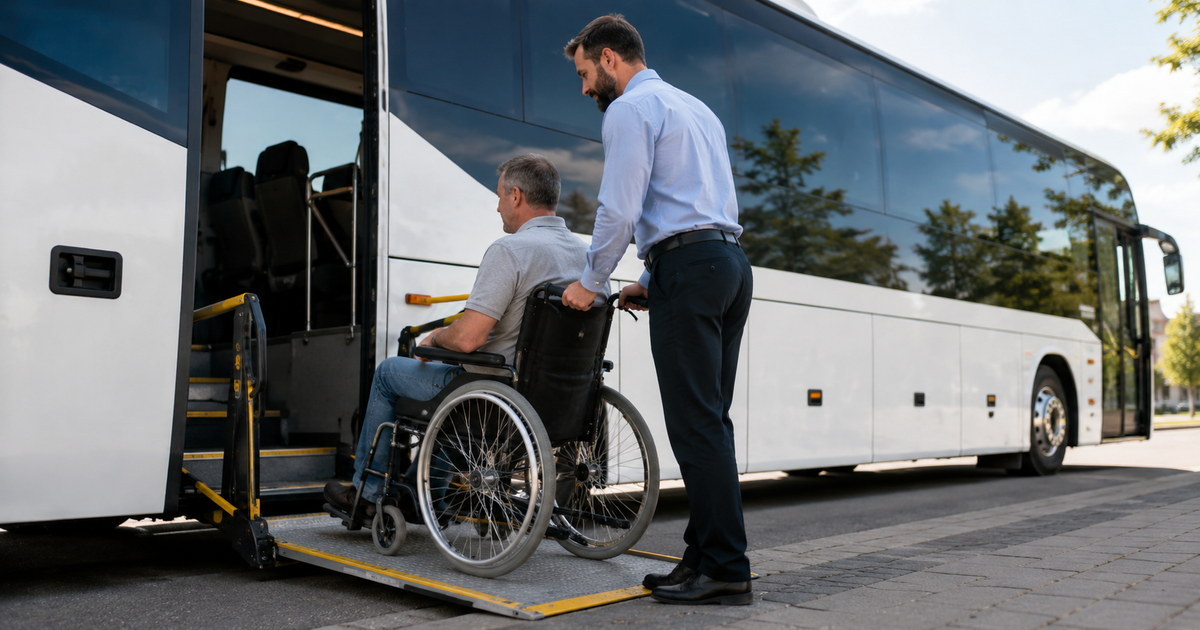
Accessible coaches and buses use features such as ramps or powered lifts for boarding, designated wheelchair spaces with securement systems, priority seating, and sometimes handrails and audible or visual aids. These let wheelchair users board and travel secured safely, and help passengers with other mobility or sensory needs. Not every vehicle has these features, which is exactly why they must be arranged rather than assumed.
Book accessible vehicles in advance
The single most important step is to arrange accessibility in advance, because accessible vehicles and features are not available on every coach at short notice. When booking, tell the operator clearly about the needs in your group, wheelchair spaces required, boarding assistance, any other requirements, so they can provide a suitable vehicle. This builds directly on choosing a good operator in our bus and coach hire guide, since a reputable operator will handle these needs properly.
Plan the journey around needs
Accessibility extends beyond the vehicle to the whole journey: pick-up and drop-off points that are accessible and safe for boarding, stops with accessible facilities, and enough time for unhurried boarding and alighting. Rushing a group with mobility needs is unsafe and undignified, so build in time. Thinking through each stage, as part of overall trip planning, ensures the accessible vehicle is matched by an accessible route.
Safe boarding and securement
Safe boarding and proper securement of wheelchairs and mobility aids are essential, and trained drivers and staff make the difference, operating lifts and ramps correctly and securing wheelchairs properly for the journey. This is a safety matter as much as a comfort one, connecting to the broader responsibilities in our bus and coach driver safety guide. Confirm the operator’s staff are trained and equipped to assist.
Communicate clearly with the group
Good communication makes accessible travel smoother: confirm the arrangements with the passengers who need them, let everyone know boarding may take a little longer, and share clear information about meeting points and timings. People appreciate knowing their needs have been planned for, and the rest of the group benefits from a calm, unhurried boarding process. Clear, respectful communication is part of inclusive travel, not just logistics.
Inclusive travel is good travel
Planning for accessibility, arranging the right vehicle in advance, choosing accessible routes and stops, ensuring trained assistance and clear communication, lets a group travel together without anyone being left behind. It is both a legal and an ethical expectation in much of the world, and it simply makes for a better trip. With the right operator and a little forethought, accessible coach and bus travel is straightforward, and it ensures everyone shares the journey on equal terms.
Accessible coach trip checklist
To plan inclusive group travel:
- Identify all accessibility needs in the group early.
- Book a vehicle with the required ramps, lifts and wheelchair spaces in advance.
- Choose accessible, safe pick-up, drop-off and stop locations.
- Confirm staff are trained to assist with boarding and securement.
- Communicate arrangements and timings clearly to the group.
Beyond mobility: sensory and other needs
Accessibility is broader than wheelchairs and mobility aids. Passengers may have visual or hearing impairments, helped by clear audible and visual announcements and information; some travel with assistance animals, which should be accommodated; and others may have conditions that make extra time, particular seating, or a calm boarding process important. Asking about the full range of needs in your group, not just mobility, lets the operator and driver prepare appropriately, whether that is reserving suitable seating, allowing more time, or ensuring information is provided in accessible ways. A genuinely inclusive trip considers the whole spectrum of passengers, and a good operator, as our coach hire guide describes, will be willing to discuss and accommodate these needs. Treating accessibility as covering sensory, cognitive and other requirements alongside mobility ensures nobody is overlooked, and it usually takes only a conversation in advance to get right.
Sources
Accessibility requirements vary by country and operator. Confirm specific needs and arrangements with a licensed operator well before travel.