Reviewed for safety and technical accuracy by an Auto Drive Tips subject-matter contributor. Road rules, licensing, and vehicle regulations vary by country and state — always verify the requirements that apply where you drive before relying on this guidance.
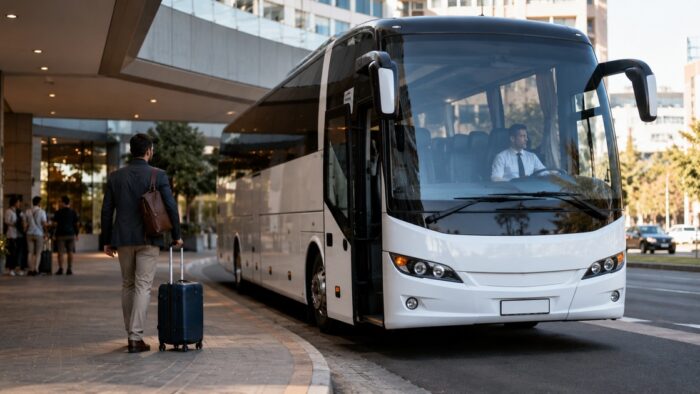
Bus driving combines the size and weight challenges of trucking with direct responsibility for 40-80 passengers. Unlike freight, passengers move during transit, distract the driver, and depend completely on the driver’s judgment in emergencies. The safety habits below come from charter bus operators, transit authorities, and coach drivers with 20+ year accident-free records.
Pre-departure
1. Pre-trip inspection — the same rules apply
Same daily inspection that applies to all commercial vehicles: tyres, brakes, lights, fluids, doors, mirrors. Buses add wheelchair lifts, passenger door operation, emergency exits, and passenger restraint systems where fitted.
2. Check emergency equipment
- Fire extinguisher charged and accessible
- First aid kit complete
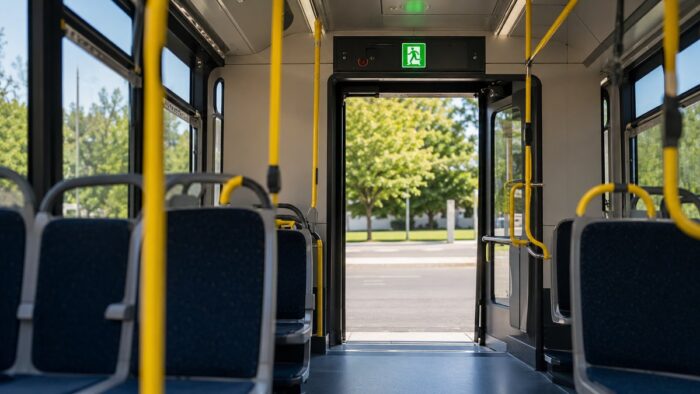
- Emergency exits operational and unobstructed
- Hammer/punch for window egress in coaches
- Reflective triangles for breakdowns
3. Verify passenger manifest (charter)
Passenger count, accessibility needs, special requirements. Knowing who’s on board matters in emergencies.
While driving — the big risks
4. Smooth acceleration and braking
Passengers don’t have seatbelts (in most transit configurations) or are standing/walking. Sudden braking throws passengers forward; aggressive acceleration throws them back. Smooth inputs aren’t comfort — they’re safety.
5. Wide turns and tail swing
Bus tail swings outward during turns. The bus rear can hit objects, vehicles, or pedestrians outside the turn radius. Especially critical at intersections and bus stops.
6. Mirror discipline
Check mirrors every 5-8 seconds. Buses have larger blind spots than cars — especially the right rear quarter. Cars and motorcyclists tuck into these blind spots constantly.
7. Following distance — extra margin
Loaded buses brake longer than equivalent rigid trucks because of higher centre of gravity and passenger comfort considerations. 4-second minimum at highway speeds; 5+ seconds in wet or heavy traffic.
8. Watch low bridges and overhead clearance
Bus heights typically 3.0-3.8 metres. Many city streets, parking garages, and older bridges have lower clearance. Low-bridge strikes have killed bus passengers historically; route awareness is critical.
Passenger management
9. Wait until passengers are seated before moving
Transit operators with frequent stops: passengers may stand, but should be holding handrails before bus moves. Coach operators: full seating before departure. Falls inside the bus are the most common passenger injuries.
10. Manage disruptive passengers
Verbal de-escalation first. Stop the bus if necessary; don’t try to drive through escalating situations. Call dispatch / police if needed. Driver and other passengers’ safety comes before schedule.
11. Watch for elderly and disabled passengers
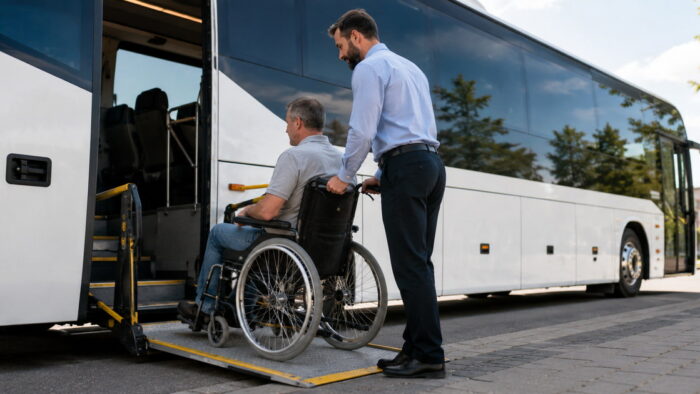
Wait for boarding completion before closing doors. Verify wheelchair securements. Be ready to deploy ramp/lift correctly.
12. Don’t move when door is open
Modern buses have interlocks; older buses may not. Driver door discipline is the last safety layer for boarding/alighting passengers.
Specific bus-driving challenges
13. Bus stops
Pulling away from a bus stop requires checking blind spots, mirror, and yielding to traffic. Pedestrians crossing in front of the bus after alighting are a constant risk. Don’t pull away until clear visibility of the stop area.
14. School zones
Even non-school-bus operators need school zone awareness. Children dart into traffic unexpectedly. Speeds well below the limit during school arrival/departure times.
15. ULEZ, congestion zones, low-emission zones
Many cities have restricted zones for older or non-compliant vehicles. Charter operators going to unfamiliar cities — verify routing before crossing zone boundaries. Fines can be significant.
16. Multi-day coaches
Coach drivers on multi-day tours face fatigue management complicated by passenger schedule expectations. Hours-of-service rules apply; passenger demands don’t override regulations.
Weather and conditions
17. High-profile vehicle in wind
Buses are tall with large flat sides. Wind gusts above 50 mph can push buses across lane markings. Empty buses are more affected than loaded. Reduce speed and grip wheel firmly in windy conditions.
18. Snow, ice, and bus weight
Heavy buses fish-tail and slide easily on ice. Snow chains required in some jurisdictions on mountain routes. Stopping distance can triple on ice — slow down dramatically.
Health considerations
19. Long shifts and back pain
Bus driver musculoskeletal issues are extensive. Stretch at every stop; adjust seat properly; consider lumbar supports.
20. Fatigue and shift patterns
Split shifts and early-morning starts disrupt sleep. Sleep quality is the main fatigue factor; protect sleep at all costs.
Smooth driving protects passengers
Pre-trip inspection daily; smooth inputs always; mirror discipline; following distance with margin; bridge/clearance awareness; passenger boarding/alighting safety; weather adjustments. Bus driving safety scales with passenger count — your decisions affect dozens of lives. Verify regulations with FMCSA (US), DVSA (UK), NHVR (Australia), or your local commercial vehicle authority.
Passenger movement is useful feedback
Passengers feel harsh braking, quick steering and uneven acceleration before the driver may notice the pattern. Standing passengers, older travellers and people moving through the aisle need even more margin. Smoothness is not only about comfort; it shows that the driver is reading hazards early enough to avoid abrupt corrections.
If the timetable can only be recovered through hard braking or rushed stops, the schedule needs escalation. The driver should not be expected to trade passenger stability for a few saved minutes.
More practical guides
- School Bus Safety Procedures
- How to Choose a Bus or Coach Hire Service
- Fleet Management for Beginners: The First-Year Playbook
Sources and Further Reading
- FMCSA commercial vehicle inspection guidance
- FMCSA hours-of-service summary
- FMCSA Commercial Vehicle Inspection Guidance
- FMCSA Hours-of-Service Summary
Passenger operations need current driver, fatigue and vehicle procedures. The operator’s safety system should answer route-specific questions.