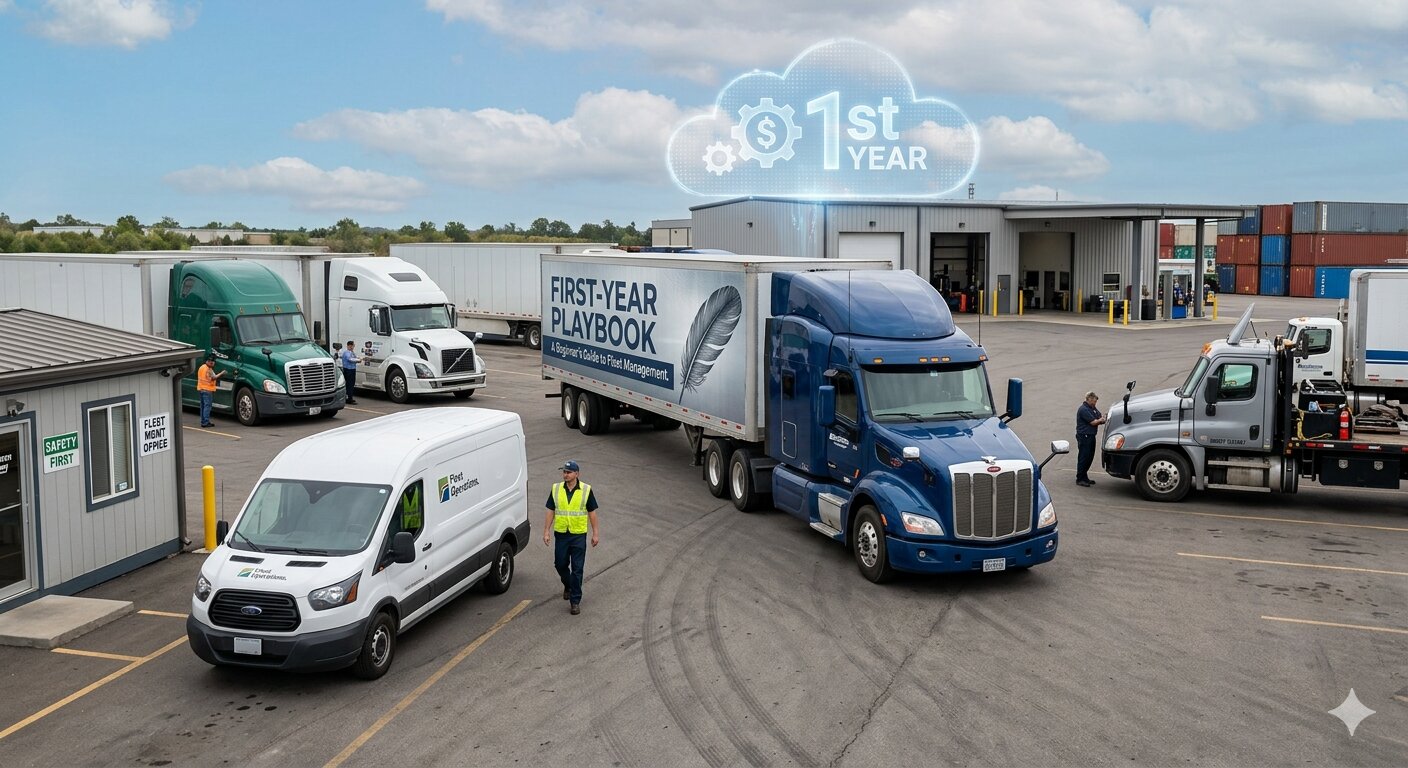
A first fleet should be managed as an operating system, not a collection of vehicles. The work, drivers, maintenance, cash flow and legal responsibilities are connected; a weakness in one area quickly appears somewhere else.
Define the work before choosing vehicles
Write down the regular routes, payload, passenger needs, parking conditions, annual distance, seasonal peaks and special equipment. Buy or lease around the common duty cycle rather than the rare job that happens once a year. Occasional specialist work can sometimes be hired.
Choose an ownership approach that protects cash flow
Buying provides control and an asset but ties up capital and exposes the business to resale risk. Leasing can simplify replacement but may limit mileage, modification and early exit. Compare the complete term, expected use and end conditions. Used vehicles need a documented inspection and a realistic repair reserve.
Put driver standards in writing
- Licence and medical requirements for the vehicle class
- Authorised use, passengers and take-home rules
- Pre-use checks and defect reporting
- Mobile phone, fatigue, speeding and seat-belt expectations
- Crash, breakdown and roadside response
- Fuel card, toll and receipt procedures
Apply the rules consistently. Coaching should explain the risk and expected behaviour, while disciplinary decisions should follow company policy and local employment law.
Build maintenance around evidence
Use manufacturer schedules, mileage or engine hours, driver observations and workshop advice. Separate planned service from defect repair. A vehicle should not return to work until an authorised person has closed a safety-related defect.
Keep service records, inspection sheets, invoices, recall checks and tire history together. Good records help with budgeting, resale, audits and recurring fault analysis.
Understand insurance and compliance early
Vehicle registration, operating authority, driver hours, load rules and insurance vary by location and operation. Speak with the relevant regulator and a broker familiar with commercial transport before the first vehicle enters service. Do not rely on passenger-car assumptions.
Track a small set of useful measures
- Availability: How often each vehicle is ready when required.
- Preventable defects: Repeated issues that better inspection or maintenance could reduce.
- Fuel or energy use: Compared only across similar work.
- Incidents and near misses: Reviewed for learning rather than hidden.
- Cost per vehicle: Including finance, insurance, maintenance, downtime and administration.
Plan replacement before the vehicle becomes a problem
Age alone is not enough. Review reliability, maintenance trend, safety equipment, suitability and resale position. A vehicle that is fully depreciated can still be expensive if it causes missed work or no longer fits the route.
A sensible first-year rhythm
- Create the vehicle and driver files before operations begin.
- Review defects and fuel data every week during the early months.
- Hold a monthly maintenance and incident review.
- Update routes, policies and budgets when evidence changes.
- Prepare a replacement and cash-reserve plan before expansion.
The first year should create a repeatable system
Growth becomes safer when the business can explain who checks the vehicle, who approves repairs, how drivers are coached and how costs are reviewed. Add vehicles only when that process works for the fleet already on the road.
Keep one file for every vehicle
The file should contain registration, insurance, purchase or lease documents, service history, inspection records, defects, recalls, tire information and disposal paperwork. A consistent file structure makes it easier for another manager to understand the vehicle without asking the person who bought it.
Driver files should be separate and access-controlled. Keep licence checks, training, incident review and acknowledgements according to local privacy and employment rules.
Do not expand faster than supervision
Each additional vehicle creates more inspections, invoices, driver questions and replacement planning. Before adding one, confirm who will review defects, approve maintenance and monitor utilisation. A vehicle that is frequently idle may signal that the fleet is already larger than the work requires.
Use suppliers as part of the system
Agree how the workshop reports urgent defects, how towing is authorised and who can approve extra work. Keep a second option for tires, recovery and specialist repairs so one unavailable supplier does not stop the operation. Review service quality as well as price.
Create an incident review that people will use
After a crash, damage event or near miss, collect facts before assigning blame. Review the route, schedule, vehicle condition, training and communication around the job. Agree the corrective action, responsible person and completion date.
Share the lesson at the right level without exposing personal information unnecessarily. A useful review changes a process, route, vehicle or behaviour; it does not end with a file note that no one sees again.
More from this topic
- How to Reduce Fleet Fuel Costs
- Truck Maintenance Checklist for Owner-Operators
- Cargo Van vs Pickup Truck: Which Is Right for Your Business?
Buying vehicles for a small fleet
Once you are running more than a couple of vehicles, buying starts to look different from buying a family car. Most wholesale and auction stock comes from a few predictable streams: ex-rental cars cycled out after a year or two, ex-lease returns, and ex-government or ex-utility vehicles. Ex-rental stock is usually late-model with a full service history and sometimes still inside its warranty, but it has often lived a hard life of short trips and many different drivers. Ex-government vehicles tend to be maintained to a schedule and driven more gently, but they can be older and higher-hour.
When you buy several at once, small faults multiply, so inspect to a repeatable checklist rather than by feel – the same points, in the same order, on every vehicle, with idle hours weighed against odometer reading. And price the whole job, not the hammer price: reconditioning, tyres, safety certification and registration all land after the purchase, and they are what turn a cheap vehicle into an expensive one.
Two practical constraints catch first-time buyers. Wholesale and auction purchases usually need payment far faster than a retail deal, so arrange finance or a commercial credit line before you bid. And decide up front whether you want one model repeated across the fleet – a single model simplifies parts, servicing and driver familiarity, which is worth more over three years than a slightly better price on a mixed batch.
Related guides
- The Real Cost of a Fleet Vehicle: Total Cost of Ownership
- When to Replace a Fleet Vehicle (and When to Keep It)
Sources and Further Reading
- FMCSA inspection, repair and maintenance guidance
- FMCSA hours-of-service summary
- FMCSA Inspection, Repair and Maintenance Guidance
- FMCSA Hours-of-Service Summary
Fleet policies should be checked against local transport, employment, insurance and tax requirements before they are rolled out.