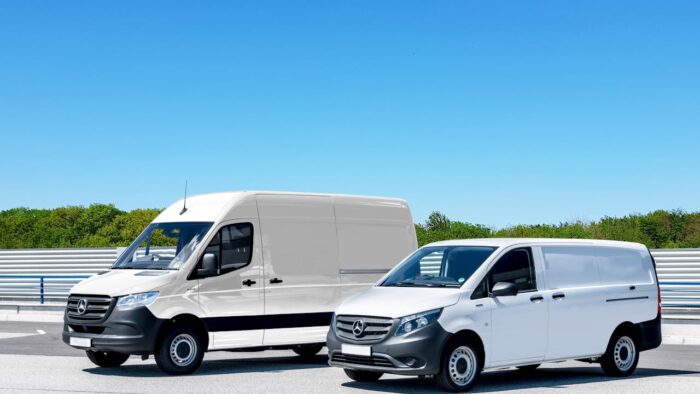
Cargo vans and pickup trucks both haul stuff for small businesses, but they are optimised for different jobs. A trades business doing service calls in suburbs needs different capabilities than a contractor hauling open materials to construction sites. Buying the wrong type means working around it for the next 5-7 years.
The fundamental difference
Cargo vans have enclosed cargo areas (steel walls, roof, doors). Everything inside is protected from weather, theft, and prying eyes. Pickup trucks have open beds. Loading is easier since cargo height isn’t restricted, and bulky items fit better. But weather, theft, and visibility are some genuine concerns.
When a cargo van wins
Service-trade businesses (plumbing, electrical, HVAC, locksmith)
Tools and parts need security and weather protection. A van’s enclosed space organizes via shelving and bins is like a rolling workshop. Customers don’t see your tools (signaling professionalism)and thieves can’t see them either!
Delivery businesses
Multiple smaller items, weather-sensitive packages, security throughout the route. Best for last-mile delivery, parts couriers, mobile pet groomers.
Tradespeople with structured inventory
Shelving and bin systems specific to your trade install easily in flat van walls and ceiling.
Camper conversion
Vans convert to campers but pickups don’t (without an awkward truck-bed camper). The growing van-life market is entirely van-based.
Common van categories
- Compact vans: Ford Transit Connect, Ram ProMaster City, Mercedes Metris are best for urban delivery and small-trade businesses
- Full-size vans: Ford Transit, Ram ProMaster, Mercedes Sprinter are best for heavier loads, taller items, sleeper conversions
- High-roof variants: Stand-up workspace inside
When a pickup truck wins
Construction and landscaping
Materials are bulky and often dirty (sand, gravel, lumber, sod). Open bed loads from above and soil can be dumped from the bed. Closed van cargo areas don’t work for dirty,dusty or wet materials.
Hauling tall or oversized items
Lumber, ladders, drywall, pipes that exceed van interior height. Pickup beds can carry tall items with a bed extender.
Towing
Most pickups out-tow most cargo vans. F-150 / Silverado / Ram 1500 routinely tow 8,000-13,000 lbs; F-250/350 tow 15,000-25,000 lbs. Cargo vans typically max around 5,000-7,500 lbs.
Off-road or rough access sites
Pickups have higher ground clearance and 4WD options. 4WD vans exist but are rare and expensive.
Personal use overlap
Pickups can substitute for a personal vehicle reasonably well. Cargo vans look very commercial; using one as the family car is awkward.
Cost comparison (US market, new vehicles)
Used market: 3-5 year old work vans depreciate steeply; offering good value for businesses willing to buy used. Pickups hold value better.
Operating costs
- Fuel economy: Both are similar – 16-22 MPG combined for work-spec full-size. Compact vans (Transit Connect, ProMaster City) achieve 20-25 MPG.
- Insurance: Cargo vans often cost slightly less to insure.
- Maintenance: Comparable; yet pickup powertrains have more options.
- Tires: Pickups often need bigger, more expensive tires.
Resale and depreciation
Before committing to either body type, look up what three- to five-year-old examples of the specific models you are considering are selling for in your own market. Resale is local and varies more between models than between vans and pickups as categories. Mileage, service history and the condition of the load area or bed usually move the asking price more than the badge does.
A sensible way to decide
- Tools and inventory needing security/weather protection? → Cargo van
- Tall, dirty, or bulky materials? → Pickup
- Significant towing needs? → Pickup
- Urban delivery, neighborhood work? → Cargo van
- Construction site access? → Pickup
- Will it also serve as personal/family vehicle? → Pickup (crew cab)
- Mobile workshop conversion planned? → Cargo van
Common buying mistakes
- Buying the wrong size for the job. Compact van for heavy-load business → constant overloading.
- Buying loaded crew-cab pickups for business use. Pay extra for features the business doesn’t need.
Choose for the work you do most
Cargo vans win for security-focused, weather-sensitive, organised-inventory businesses. Pickup trucks win for open-load, dirty-material, towing-heavy, or dual-use scenarios. If you are new to this then verify capacity ratings, total cost of ownership including upfit, and resale before committing. This is a general guidance so your best bet would be to consult your accountant about tax treatment of commercial vehicle purchases.
Test the workday before buying the vehicle
A short trial can reveal problems that are easy to miss in a specification sheet. Load the tools or sample freight you carry most often, drive the usual route and park where the vehicle would normally stop. Notice how many times the driver climbs in and out, whether the side or rear access works in tight spaces, and how long it takes to find one small item.
For businesses with mixed work, the answer may not be one vehicle type. A cargo van can handle secure daily service work while a hired pickup or trailer covers occasional bulky loads. That can be cheaper and simpler than buying a vehicle around the least common job.
Compare total ownership with local quotes
Purchase price is only one line. Include insurance, tax, fuel or charging, tires, servicing, storage, upfitting, downtime and expected resale. A pickup may retain value differently from a working van, while a van may reduce theft exposure and weather damage. Get quotes for the exact body, engine, cab and business use rather than relying on a broad market average.
Upfit cost also depends on the work. Shelving, partitions, lighting, a canopy, ladder rack or trailer equipment can change the decision. Design the work layout before choosing the base vehicle.
Continue your research
- Best Vans for Small Businesses: 2026 Buying Guide
- Cargo Van Rental Guide for Moving and Business Use
- Fleet Management for Beginners: The First-Year Playbook
Sources and Further Reading
Payload, towing and access limits should be confirmed for the exact vehicle rather than inferred from a model name or body style.