Reviewed for safety and technical accuracy by an Auto Drive Tips subject-matter contributor. Road rules, licensing, and vehicle regulations vary by country and state — always verify the requirements that apply where you drive before relying on this guidance.
Evacuating a crowded city bus is a very different challenge from a school bus with seated children. Standing passengers, mixed mobility, and the public’s unpredictability mean transit and articulated (“bendy”) bus drivers need clear, practised procedures for the rare moments that demand them, such as a fire, a collision, or a smoke event.
When to evacuate — and when not to
Evacuation is not automatic. In some incidents, keeping passengers on board and moving the bus to safety is the better choice; in others — fire, smoke, fuel leak, or a crash blocking the roadway — getting people off quickly is essential. The driver’s first job is a rapid assessment: is the greater risk inside the vehicle or outside it? Follow your transit authority’s standard operating procedures, which are written for exactly these decisions.
Know your emergency exits before you need them
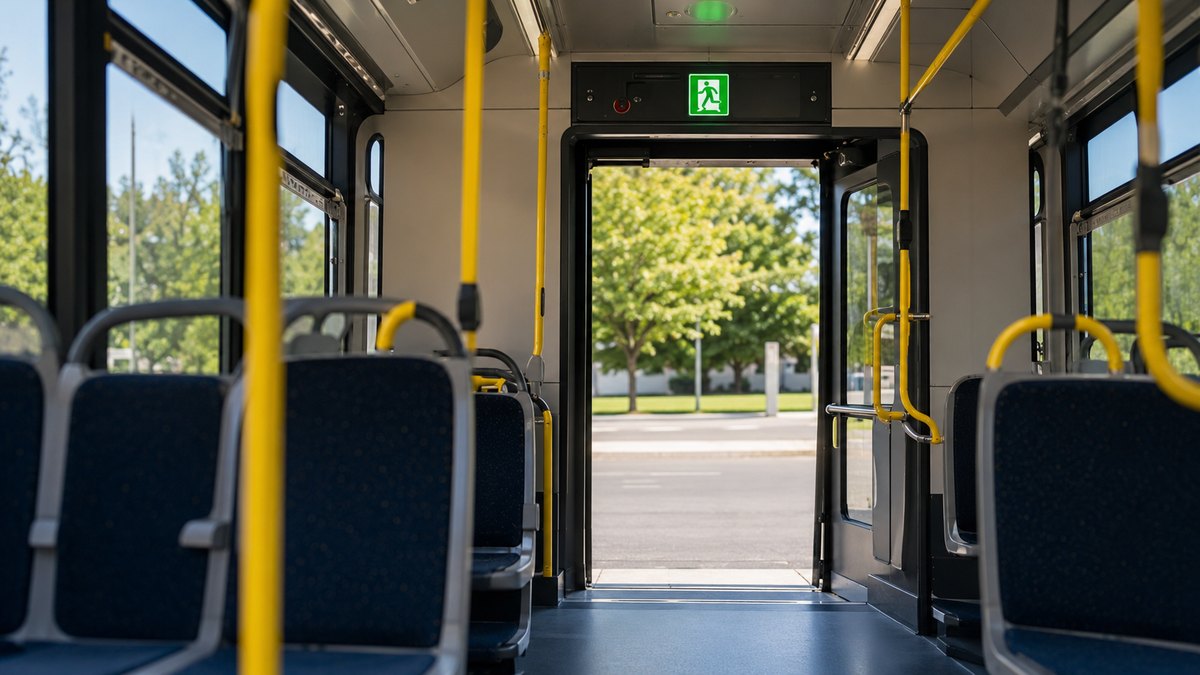
A transit bus has more egress points than passengers usually notice:
- Pneumatic door emergency releases that open the doors even with the engine off.
- Emergency window exits that push or kick out, and roof hatches on some models.
- The rear or centre doors, which on articulated buses may be the fastest route depending on where the hazard is.
Drivers should be able to locate and operate every release without looking, and should know how the articulation joint affects movement through the vehicle.
Managing the crowd and preventing panic
In a full bus, panic and crushing are as dangerous as the original hazard. Clear communication keeps people moving safely:
| Do | Avoid |
|---|---|
| Give short, firm, repeated instructions | Vague or panicked shouting |
| Direct passengers to the safest exit away from the hazard | Sending everyone to one crowded door |
| Keep people moving to a safe distance from the bus | Letting a crowd gather beside the vehicle |
| Ask able passengers to assist those who need help | Attempting to carry everyone yourself |
Helping passengers who cannot move quickly
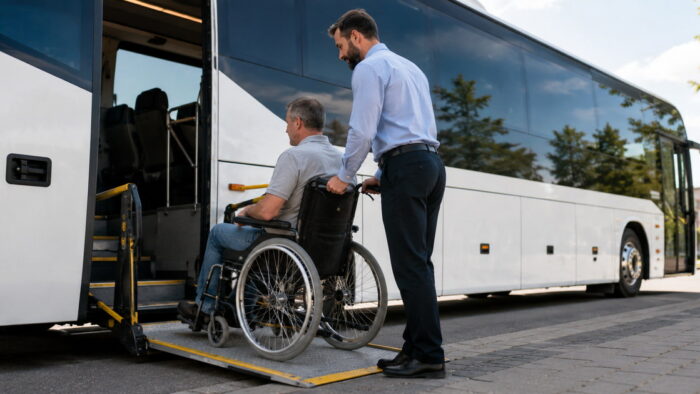
Crowded routes carry wheelchair users, elderly passengers, parents with prams, and people with reduced mobility. Where it is safe, deploy the ramp or lift, ask nearby passengers to assist, and prioritise those who cannot self-evacuate — without blocking the flow for everyone else. Accessibility and safe-egress requirements are set out by bodies such as the US ADA and their equivalents; drivers should know how their specific vehicle’s accessibility equipment works in an emergency.
After everyone is off
Move passengers well clear of traffic and the vehicle, account for numbers if you can, call emergency services with your exact location, and do not re-enter a burning or smoke-filled bus. Preparedness comes from training: emergency-action planning and drills, of the kind described in OSHA guidance and transit-authority programmes, are what make the right actions automatic under pressure.
Frequently asked questions
Should a bus driver always evacuate after a collision?
No. The driver must judge whether the greater danger is inside or outside the bus. Fire, smoke, or a fuel leak calls for immediate evacuation; in other cases keeping passengers on board may be safer, per the transit authority’s procedures.
How do bus emergency door releases work?
Most transit buses have a clearly marked pneumatic release that lets the doors be opened manually even when the engine is off. Drivers should practise using every release so they can operate it instantly.
How do you prevent panic during a bus evacuation?
Give short, firm, repeated instructions, direct people to the safest exit rather than one crowded door, and keep the crowd moving to a safe distance. Calm, clear direction is the strongest tool against crushing and panic.