Road rules, licensing, and vehicle regulations vary by country and state – always verify the requirements that apply where you drive before relying on this guidance.
An emergency kit earns its space when it is easy to reach, suited to the route and checked often enough to work. A random box of tools in the boot is not the same thing.
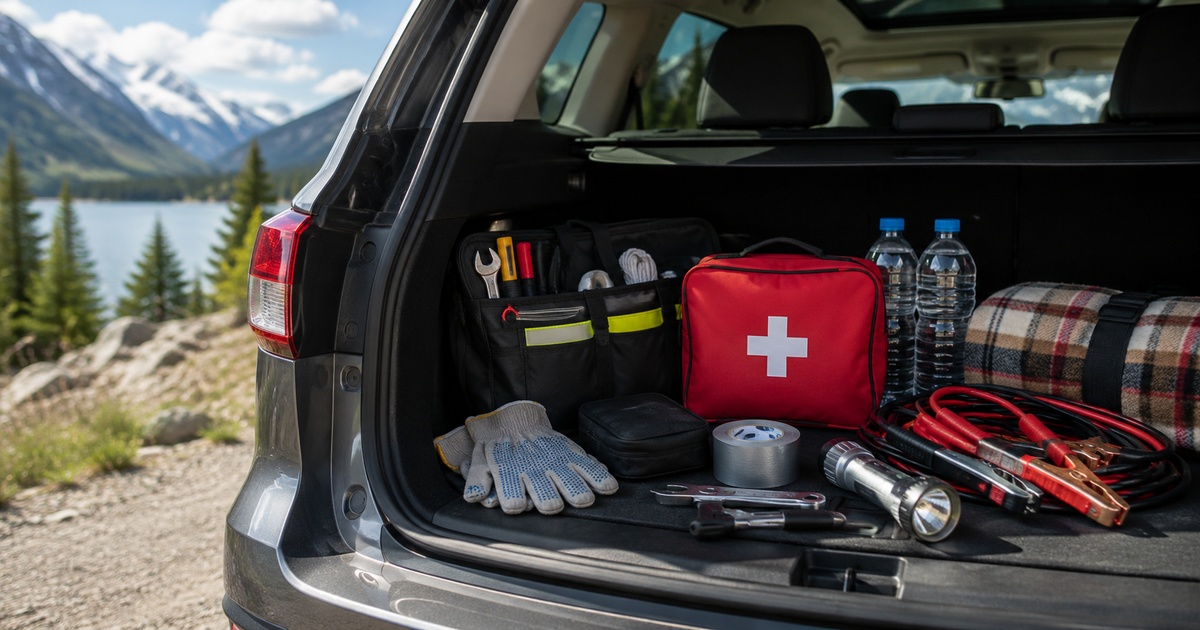
A useful road trip emergency kit should solve likely problems without becoming an unsecured pile of equipment. Pack for the route, season, passengers and vehicle, then store the kit where it can be reached safely. Check dates, batteries and condition before each long journey.
Start with communication, visibility, hydration, basic first aid, vehicle-specific tools and weather protection. Add supplies for remote travel, children, pets or medical needs. The kit supports a safe response but does not make a hazardous roadside repair appropriate.
Build the kit around likely problems
The exact list changes by climate and route, but the following categories cover the most common roadside needs.
Communication
A charged phone, power bank, charging cable and written emergency contacts.
Visibility
Reflective vest, warning triangle or locally approved warning device, and a reliable torch.
Water and food
Drinking water and shelf-stable food suitable for the expected delay and passengers.
First aid
A maintained first-aid kit plus personal medication and allergy information.
Weather protection
Blanket, rain layer, sun protection and suitable footwear.
Vehicle items
Owner manual, tire inflator or approved repair kit where supplied, wheel tools and spare key plan.
A city motorway and a remote road need different plans
A motorway trip between large towns needs a different kit from a remote desert, mountain or winter route. Review mobile coverage, distance between services, forecast, road closures and the time a recovery service may need to reach you.
For international travel, add copies of the rental agreement, insurance details, driving documents and local emergency numbers. Keep sensitive documents secure and avoid leaving visible valuables in the parked vehicle.
Pack it so you can find it in the dark
- Secure heavy objects: Use a closed compartment, cargo barrier or tied container so tools cannot enter the cabin during sudden braking.
- Keep urgent items accessible: A torch, visibility vest and phone should be reachable without unloading the entire boot.
- Protect from heat and moisture: High cabin temperatures can damage batteries, medication, food and pressurised products.
- Label and group items: Small pouches for medical, power, weather and vehicle equipment make the kit easier to use under stress.
When the car stops, protect people first
- Move away from live traffic when the vehicle can be driven safely.
- Use warning devices and lights according to local law and only when placement does not expose you to traffic.
- Call the relevant roadside or emergency service and give the road, direction, nearest marker and vehicle description.
- Remain behind a barrier or in another protected location where official guidance recommends it.
- Do not attempt a tire change or repair where traffic, unstable ground, weather or visibility makes the task unsafe.
The five-minute check before a long trip
Review the kit at least twice a year and before a demanding trip. Replace expired first-aid items, test lights and power banks, refresh water and food, and confirm that tools still match the vehicle. A vehicle change may also change the spare-wheel, jack, locking-nut and charging requirements.
Three practical questions about emergency kits
- Should I carry a fire extinguisher?
Requirements and recommended types vary. Carry one only when it is approved for the vehicle, mounted securely and you understand that personal safety and evacuation come first. - Is a tire sealant kit enough?
It may help with some tread punctures but not sidewall damage, a damaged wheel or a large leak. Check the manufacturer instructions and expiry date. - Where should emergency water be stored?
Use sealed containers protected from direct heat and inspect them regularly. Carry more for remote or hot routes.
Pack for the people in the car as well
Vehicle equipment is only half of an emergency kit. A family travelling with a baby, an older passenger, a pet or someone who uses regular medication has different needs from a solo commuter. Add essential medication, a written medical contact, spare prescription glasses, suitable food and any mobility or communication item that could become difficult to replace during a delay.
Think about temperature. Water, medication, batteries and food may deteriorate in a hot parked car, while winter travel may require dry layers, gloves and insulation rather than a larger tool bag. Store sensitive items according to their instructions and move them in or out of the vehicle when the season changes.
Leave risky repairs to roadside professionals
The presence of a jack, cable or sealant does not make every location safe for repair. A narrow shoulder, soft ground, poor visibility or fast traffic can turn a minor problem into a serious exposure. When the scene is unsafe, focus on getting occupants to a protected position and giving the recovery service an accurate location.
Continue your research
- Long Distance Driving Checklist
- Tire Maintenance Guide: Pressure, Tread, Rotation, Replacement
- Brake Inspection Checklist for Every Driver
Related guides
Sources and Further Reading
- NHTSA summer driving and road trip tips
- NHTSA vehicle recall lookup
- NHTSA: Summer Driving and Road Trip Tips
- NHTSA Vehicle Recall Lookup
Review the kit against the season and passengers before each demanding trip; replace anything expired, damaged or unsuitable for the vehicle.