The most useful comparison starts with an ordinary week: where the car sleeps, how far it travels and how often it must handle a journey that is very different from the daily routine.
The better powertrain is the one that fits where the car parks and how it is used most weeks. An electric car benefits most from reliable charging, while a hybrid can reduce fuel use without requiring a plug. A plug-in hybrid only delivers its intended benefit when it is charged regularly and driven within an appropriate pattern.
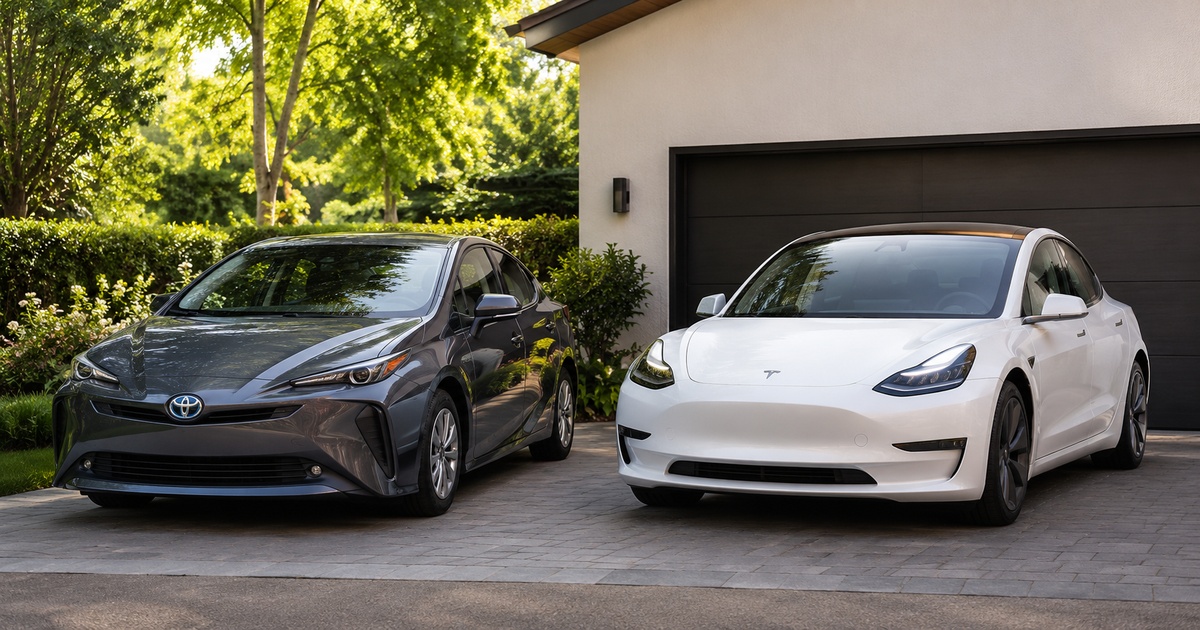
Choose a battery electric car when home or workplace charging is reliable and normal routes fit the usable range. Consider a conventional hybrid when charging is unavailable but much of the driving is urban. Consider a plug-in hybrid only after planning both charging and longer fuel-powered use.
First question: where will the car charge?
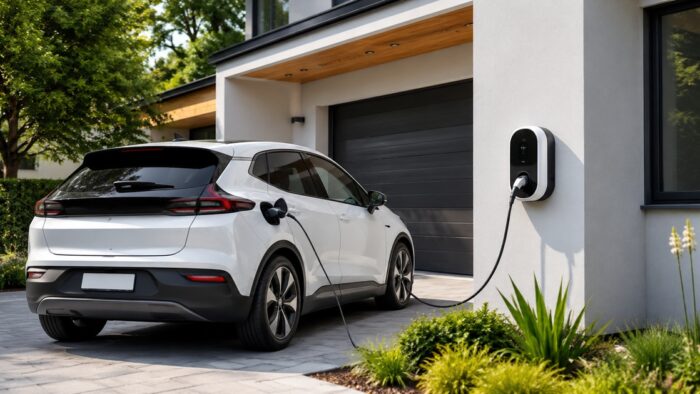
A private driveway or assigned charger can make EV ownership simple. Drivers who rely entirely on public charging should assess price, reliability, parking time and alternatives before buying.
For a plug-in hybrid, failing to charge can mean carrying a battery and electric system without using them effectively.
What the labels mean in everyday use
Battery electric
Runs on electricity and requires charging; has no petrol or diesel engine.
Conventional hybrid
Uses fuel with an electric motor and small battery charged by the vehicle.
Plug-in hybrid
Can be charged externally and also has an engine for longer operation.
Mild hybrid
Uses electrical assistance but generally cannot drive meaningful distance on electricity alone.
Match the powertrain to your normal week
- Daily distance: How far is the normal round trip, including errands and seasonal variation?
- Long journeys: How often do you travel beyond the practical EV range and where are chargers located?
- Parking time: Can the vehicle charge while it would already be parked?
- Climate and terrain: Temperature, speed and elevation affect energy use.
- Load and towing: Confirm ratings and energy impact for the exact vehicle.
Do the cost comparison with local numbers
Use local energy prices, insurance, finance, maintenance, taxes, incentives and expected resale. Public rapid charging can cost more than home charging, while a hybrid still needs fuel and engine servicing.
Do not assume one technology always has the lowest environmental impact or cost. Vehicle size, energy source, annual distance and how long the vehicle is kept all influence the result.
The test drive still matters
Seat comfort, visibility, cargo space, controls, charging-port position and driver-assistance behaviour differ more than the powertrain label suggests. Test a route that resembles normal use and confirm the warranty terms for the vehicle and battery.
A few final questions before choosing
Is an EV suitable without home charging?
It can be, especially with reliable workplace or nearby public charging, but the time and price should be tested before purchase.
Does a hybrid need to be plugged in?
A conventional hybrid does not. A plug-in hybrid should be charged regularly to use its electric capability.
Which is better for frequent long motorway trips?
It depends on charging coverage, stop patterns, vehicle efficiency and budget. A hybrid may be simpler in areas with limited charging, while an EV can work well on strong charging corridors.
Three ordinary households may reach different answers
The driveway commuter: The car returns to the same parking space every night and covers a predictable daily distance. Reliable home charging can make a battery electric car easy to live with.
The apartment driver: Parking changes and charging depends on public locations. A conventional hybrid may be simpler until dependable charging is available, although some drivers can make an EV work with workplace charging.
The mixed-use family: Most trips are short, but several long journeys are made each month with luggage or towing. The decision depends on the exact EV route and charging network, not the average daily distance alone.
These are examples, not rules. The useful exercise is to describe your own difficult week, not only the easiest one.
Do not buy the powertrain before checking the car
Boot shape, rear-seat space, visibility, ride comfort and insurance can matter more over several years than the label on the tailgate. Compare complete vehicles in the price range, then decide which powertrain fits the final shortlist.
Include the inconvenient journeys in the comparison
People often compare powertrains using the easy daily commute and ignore the occasional trip that shapes the purchase decision. Add airport runs, family visits, winter travel, towing, street parking and days when the usual charger is unavailable. Then decide whether those cases require a different vehicle or simply a different plan.
One household may accept a longer charging stop several times a year, while another values the ability to refuel quickly every week. Neither preference is wrong; it belongs in the ownership calculation.
Other guides worth opening
Sources and Further Reading
- Alternative Fuels Data Center EV benefits and considerations
- Alternative Fuels Data Center home charging guidance
- Alternative Fuels Data Center public charging guidance
- Alternative Fuels Data Center: EV Benefits and Considerations
- Alternative Fuels Data Center: Home Charging
- Alternative Fuels Data Center: Public Charging
Use current local prices and specifications for the exact shortlist; broad EV-versus-hybrid claims rarely describe every household.