Road rules, licensing, and vehicle regulations vary by country and state – always verify the requirements that apply where you drive before relying on this guidance.
A weak battery does not always announce itself with a completely dead car. Slow cranking, repeated jump starts or changing electrical behaviour often appear first, and the cause may be the battery, charging system or a poor connection.
A slow start may come from the battery, charging system, connections or another electrical fault. Use the correct test rather than replacing parts by guesswork. Keep the battery secure and clean, follow the owner manual and arrange professional assessment when starting performance changes.
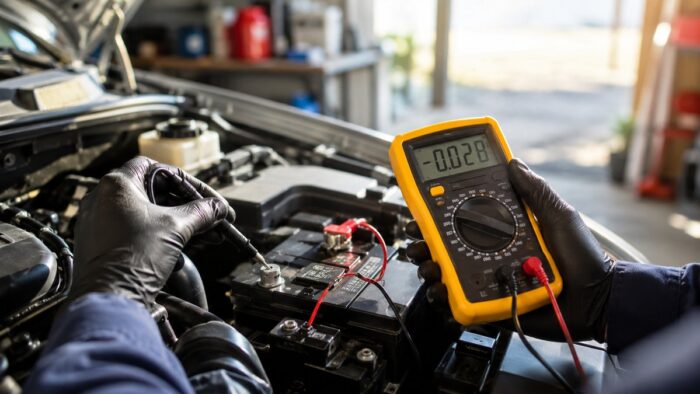
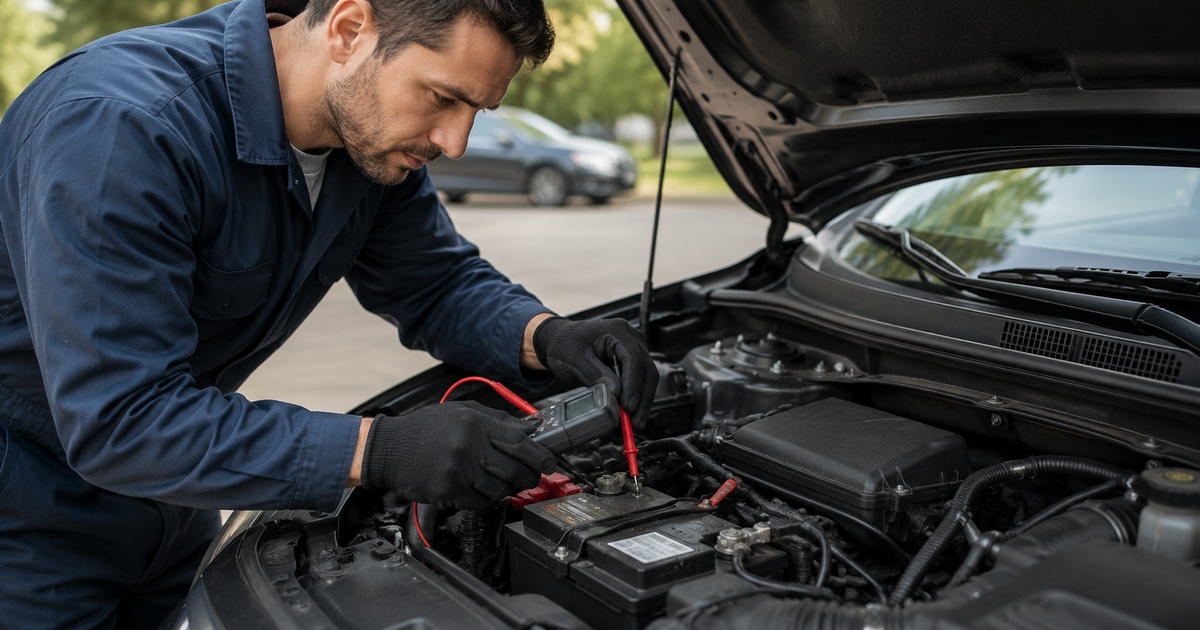
Inspect for damage, leakage, loose mounting and corrosion without touching unsafe components. Notice slow cranking, repeated jump starts, dimming or warning lights. A technician can test battery condition, charging voltage and parasitic drain to identify the cause.
What the car may be telling you
Slow cranking
The starter turns the engine more slowly than usual.
Clicking without starting
Power may be too low, but connections or starter faults are also possible.
Repeated flat battery
The battery may be weak or the vehicle may have a charging or drain problem.
Electrical changes
Lights, windows or accessories behave differently during starting.
Visible damage
Swelling, cracks, leakage or a strong unusual odour requires caution.
Warning light
A battery-shaped dashboard light often relates to the charging system, not only the battery.
Why a fairly new battery can still struggle
Heat, cold, vibration, repeated deep discharge, long storage and charging-system faults can shorten service life. Modern vehicles may continue using power while parked for security, communication and convenience systems.
A battery maintainer can help a stored vehicle when it is compatible with the battery chemistry and connected according to the manufacturer instructions.
Simple checks that do not require guesswork
- Read the owner manual: Battery location, disconnect procedure and electronic reset needs vary.
- Keep the top clean and dry: Dirt and moisture can make inspection difficult and contribute to poor connections.
- Check mounting: The battery should not move in its tray.
- Inspect terminals visually: Corrosion or looseness should be handled with the correct protective equipment and procedure.
- Drive or charge appropriately: Very short trips may not replace the energy used for starting, especially in cold weather.
Jump starting is not the diagnosis
Incorrect connections can damage electronics, create sparks or expose the user to battery hazards. Follow the vehicle manual and the jump pack instructions. Some vehicles have designated remote terminals and should not be connected directly at the battery.
After a successful jump start, testing is still important. Driving for a short period may not restore a deeply discharged or failing battery.
When testing is better than another battery purchase
Arrange testing after repeated slow starts, a charging warning, unexplained discharge or replacement of more than one battery in a short period. The technician should assess the battery, alternator or converter, cables and abnormal key-off current where relevant.
Battery questions drivers often ask
How long does a car battery last?
Life varies with climate, battery type, vehicle use and charging conditions. Test condition rather than replacing solely by age.
Can corrosion be cleaned at home?
Only with the correct procedure and protective equipment. If the battery is damaged, leaking, swollen or difficult to access, use a professional.
Does an electric car have a normal 12-volt battery?
Most EVs use a low-voltage battery for controls and accessories in addition to the high-voltage traction battery. Service procedures are vehicle-specific.
Keep a short battery history
Write down when the battery was installed, when the car needed a jump start and any test result supplied by a workshop. Also note long periods of storage or a recent accessory installation. That history helps a technician distinguish an ageing battery from a charging fault or an electrical drain.
If the battery becomes flat again soon after charging, do not assume the previous charge was simply too short. Repeated discharge can damage a battery and may point to a fault elsewhere in the vehicle.
Weather changes the symptoms
Cold conditions can expose a weak battery during starting, while high heat can shorten battery life even when the problem does not appear until later. Seasonal changes are a good time to check security, visible condition and starting behaviour, especially before a long trip.
After a jump start, watch the next few journeys
A successful jump start proves only that the engine could be started with outside power. It does not show that the battery is healthy or that the charging system is working correctly. Notice whether cranking remains slow, warning lights appear, or the battery becomes flat again after the vehicle has been parked.
Where the vehicle has start-stop technology, battery replacement may require the correct battery type and a registration or reset procedure. Check the owner manual or use a workshop familiar with the vehicle rather than matching only the physical size.
Keep the latest test result with the vehicle records so future changes are easier to compare.
Useful next reads
- Long Distance Driving Checklist
- Tire Maintenance Guide: Pressure, Tread, Rotation, Replacement
- Brake Inspection Checklist for Every Driver
Related guides
Sources and Further Reading
A battery warning may involve the charging or starting system. Use the owner manual and a proper test before replacing components.