Road rules, licensing, and vehicle regulations vary by country and state – always verify the requirements that apply where you drive before relying on this guidance.
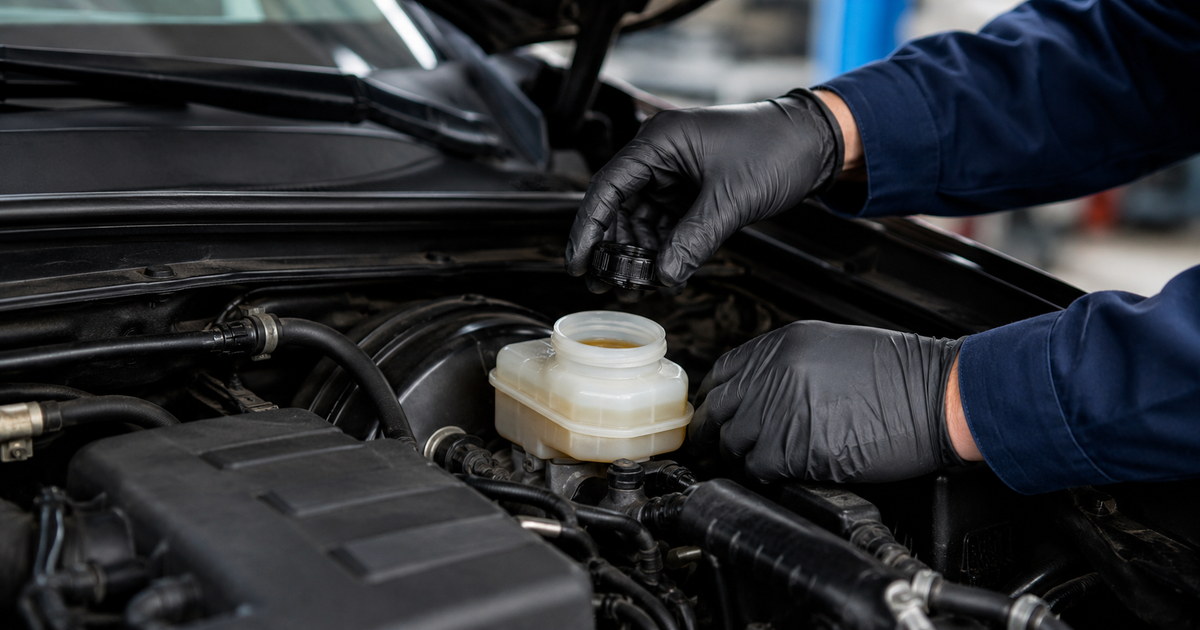
Brake fluid is the quiet link between your foot and the brakes, and it is one of the most overlooked fluids in the car despite doing a safety-critical job. Because it degrades invisibly over time, many drivers never think about it until something feels wrong, which is exactly the wrong time.
What brake fluid does
Brakes are hydraulic: when you press the pedal, brake fluid transmits that pressure through the lines to the brakes at each wheel, which is what actually slows the car. The fluid must be incompressible and stable under heat to do this reliably. If it cannot transmit pressure properly, your braking suffers, so this unseen fluid is fundamental to whether the car stops when you ask it to.
Why it degrades: moisture
Most brake fluid is hygroscopic, meaning it absorbs moisture from the air over time, and that moisture lowers the fluid’s boiling point and can cause internal corrosion. Water in the fluid is the core problem: under hard or repeated braking the fluid heats up, and if it boils, it forms compressible vapour that makes the pedal feel soft and reduces braking, an effect related to brake fade. This is why brake fluid does not last indefinitely even if the car is barely used.
Warning signs to watch
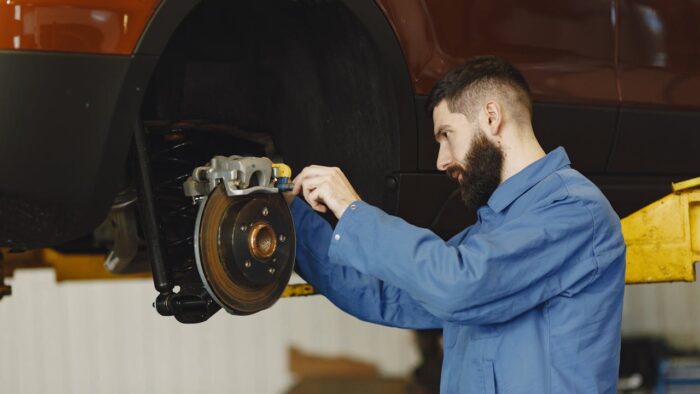
Several clues suggest brake fluid trouble: a soft, spongy or sinking brake pedal, a brake warning light, reduced braking performance, or fluid that looks dark and dirty rather than clear. A low fluid level can also indicate a leak or worn brake pads. Any of these warrants prompt inspection, and a soft or sinking pedal in particular should be treated as urgent, alongside the checks in our brake inspection checklist.
Change it on schedule
Because the fluid absorbs moisture gradually, manufacturers specify a periodic brake-fluid change, often on a time basis as much as mileage, to remove the old, moisture-laden fluid and refresh the system’s performance and corrosion protection. Following that interval, even if the brakes feel fine, is the point, since the degradation is invisible until it bites. It is inexpensive servicing that directly protects a safety-critical system.
Use the right fluid and keep it sealed
Brake fluid comes in specifications, and using the correct type for your car matters, as does not mixing incompatible types. Because it absorbs moisture, brake fluid should be kept sealed and fresh; an old, opened container has likely taken on water. Topping up should be done with the correct fresh fluid, and persistent low levels investigated rather than just refilled, much as our maintenance guidance advises for other fluids.
Don’t ignore brake feel
Your braking is not the place to take chances, so any change in how the pedal feels, sponginess, a longer pedal travel, or weaker stopping, should prompt a check rather than a wait-and-see. Brake fluid problems can develop alongside worn pads or leaks, so a professional inspection can identify whether it is the fluid, the pads, or the system. Treating brake feel as important information keeps small issues from becoming failures, as our maintenance habits stress generally.
Quiet maintenance, real safety
Brake fluid never asks for attention, which is precisely why it gets neglected, yet fresh fluid in good condition is essential to reliable braking. Changing it on the manufacturer’s schedule, using the right type, and acting on any change in pedal feel together keep your braking sharp and dependable. It is one of those low-profile maintenance items whose payoff is simply that the car stops properly, every time, when you need it to.
Brake fluid checklist
To protect your braking:
- Know that brake fluid transmits your pedal pressure to the brakes.
- Understand it absorbs moisture and degrades over time.
- Watch for a soft or sinking pedal, warning light, or dark fluid.
- Change it on the manufacturer’s schedule, not just by mileage.
- Use the correct fluid type and investigate low levels.
Why a professional flush matters
Changing brake fluid properly is more than topping up: it usually involves bleeding the system to push out the old, moisture-laden fluid and any trapped air, since air in the lines is compressible and makes the pedal feel soft, much like boiled fluid. This is why a brake-fluid change is typically done as a professional flush and bleed rather than a simple refill, ensuring fresh fluid throughout and no air in the system. If you ever notice a spongy pedal after work on the brakes, it may signal trapped air that needs bleeding out. For most drivers, having the fluid changed at the recommended interval as part of servicing, alongside the inspections in our brake inspection checklist, is the practical way to keep this safety-critical system performing, and it is inexpensive insurance against the kind of fade that turns a firm pedal soft when you need it most.
Related guides
Sources
Brake fluid type and change intervals vary by vehicle. Follow your owner’s manual, and have any change in brake feel inspected promptly.