Road rules, licensing, and vehicle regulations vary by country and state – always verify the requirements that apply where you drive before relying on this guidance.
Wiper blades and washer fluid are easy to overlook, yet clear vision is the most basic safety system your car has. Worn wipers or an empty washer bottle at the wrong moment, into low sun or road spray, can blind you exactly when you most need to see. They are cheap to maintain and quick to check.
Why visibility is a safety system
You cannot react to what you cannot see, so keeping the windscreen clear is as much a safety function as brakes or tyres. Rain, road spray, mud, salt, dust and dead insects all coat the glass, and in low sun a dirty screen turns into a blinding glare. Treating wipers and washer fluid as safety items, not afterthoughts, keeps that primary sense, your view of the road, working when conditions turn against you.
Signs your wipers are worn
Wiper blades degrade with use, sun and weather, and the signs are clear: streaking, smearing, skipping or chattering across the glass, leaving patches unwiped, or visibly cracked, split or hardened rubber. If the wipers no longer leave a clean sweep, they are due for replacement. Because they wear gradually, it is easy not to notice how poor they have become until you are caught in heavy rain, as our wet-weather driving guide highlights.
Replacing blades is easy and cheap
Wiper blades are among the simplest and least expensive parts to replace, and most can be changed without tools in minutes. Use the correct size and type for your car, which the owner’s manual or a store guide will specify. Many drivers replace them roughly once a year, or sooner if performance drops, and doing so before the wet season rather than during it is the sensible habit, alongside the seasonal checks every car benefits from.
Keep the washer fluid topped up
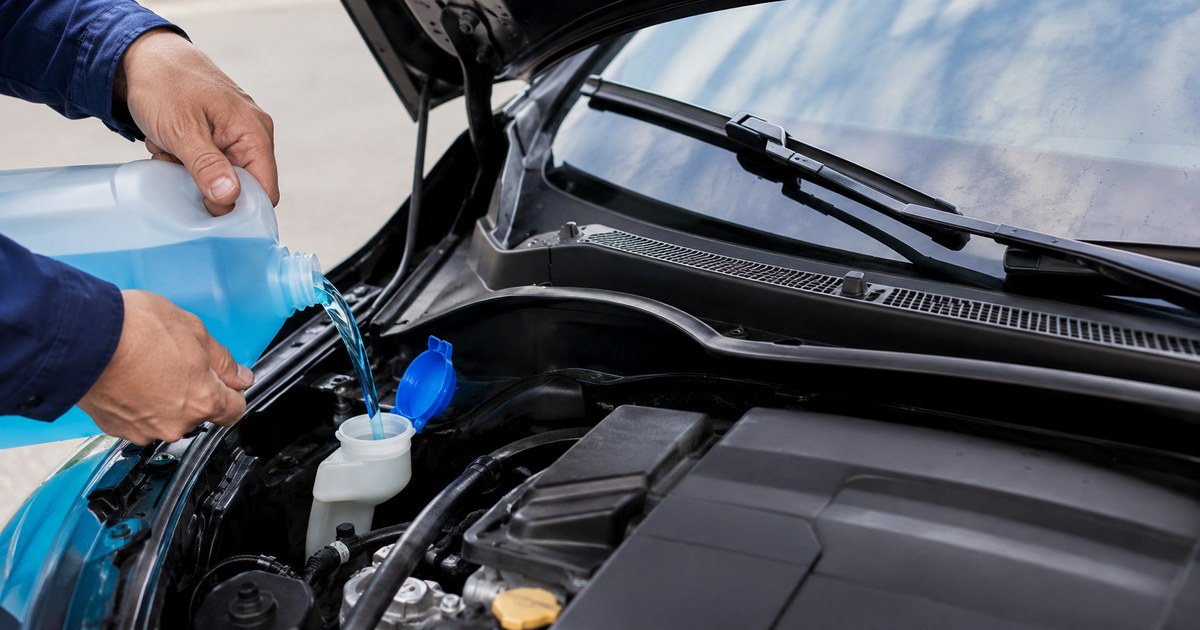
Washer fluid clears the muck wipers alone cannot, and an empty bottle leaves you smearing a dirty screen. Check and top up the washer reservoir regularly, and never let it run dry just as you hit a salty, sprayed motorway. It takes seconds to refill and is one of the easiest maintenance habits to keep, pairing naturally with the routine checks in our tire maintenance guide.
Use the right fluid, not just water
Plain water is a poor washer fluid: it freezes in cold weather, potentially cracking the reservoir or lines, and it cleans poorly. Use proper washer fluid, and in cold climates a winter-rated one that resists freezing, mixed to the correct concentration. The right fluid clears grime, bugs and salt far better and protects the system from freezing, which matters most exactly when visibility is hardest in winter.
Don’t forget the rear and the glass itself
If your car has a rear wiper, it needs the same attention, since reversing and lane-changing rely on a clear rear view. Keeping the glass itself clean inside and out also helps, as an oily interior film scatters light into glare at night and in low sun. A quick wipe of the inside of the windscreen complements good blades and fluid for the clearest possible view in all conditions.
A small habit with a big payoff
Checking your wipers and topping up washer fluid takes a couple of minutes and costs very little, yet it directly protects your ability to see and react. Replace blades before they fail, keep the right fluid topped up, and clean the glass, and you remove one of the simplest, most preventable causes of poor visibility. It is maintenance that pays back the first time it rains hard or the sun drops low on a dirty screen.
Visibility maintenance checklist
Keep your view clear:
- Replace wipers that streak, skip, smear or look cracked.
- Use the correct blade size and type for your car.
- Keep the washer reservoir topped up.
- Use proper washer fluid, winter-rated in the cold, not plain water.
- Clean the glass inside and out, and maintain the rear wiper too.
Cold-weather wiper care
Winter is hard on wipers and worth a little extra care. Never use the wipers to clear ice from a frozen windscreen, which can tear the rubber and strain the motor; clear ice with a scraper and the demister first. In frosty conditions, some drivers lift the blades away from the glass overnight so they do not freeze stuck, which can damage them when switched on. Make sure the washer fluid is a winter-rated, freeze-resistant type, since spraying water onto a cold screen can freeze instantly and blind you, and a frozen reservoir helps no one. Keeping blades in good condition and using the right fluid matters most exactly when winter spray, salt and low sun make visibility hardest, which is why these checks belong in the autumn preparation every car benefits from, alongside the habits in our tire maintenance guide.
Sources
Blade sizes and fluid types vary by vehicle and climate. Follow your owner’s manual for the correct parts and fluid.