Road rules, licensing, and vehicle regulations vary by country and state – always verify the requirements that apply where you drive before relying on this guidance.
Most cars have two air filters doing very different jobs, and both are cheap, easily forgotten, and worth keeping fresh. One protects your engine; the other protects the air you breathe in the cabin. Knowing the difference, and the signs each is overdue, makes them simple to stay on top of.
Two filters, two jobs
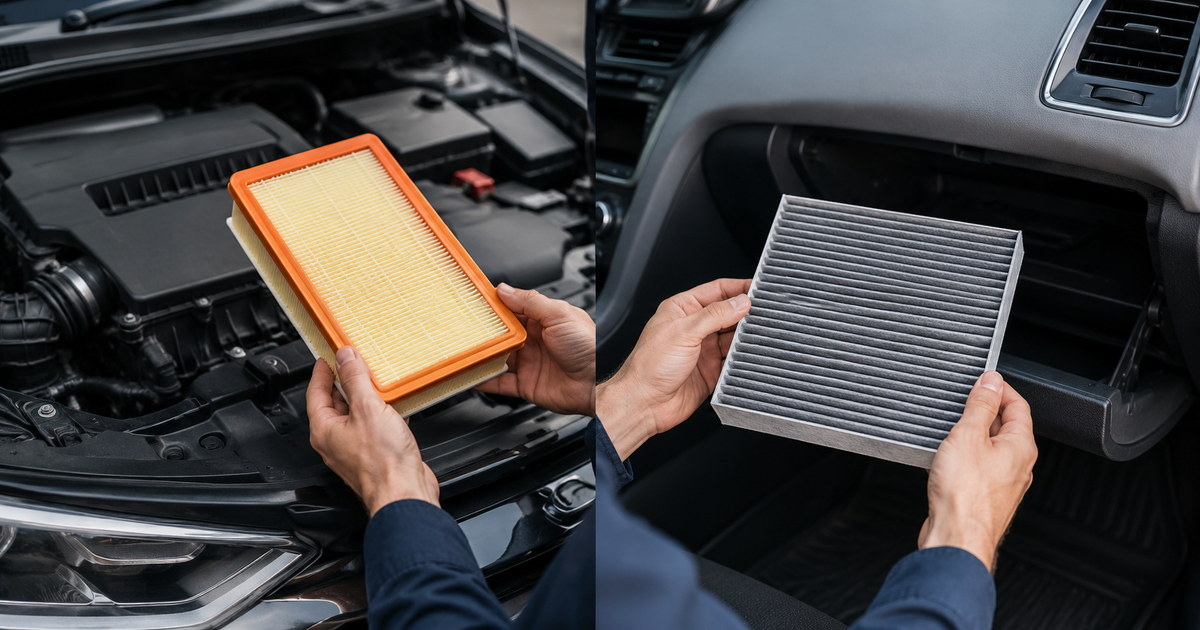
The engine air filter cleans the air going into the engine for combustion, keeping out dust and debris that would cause wear. The cabin air filter cleans the air coming into the passenger compartment through the ventilation system, trapping pollen, dust and pollutants before you breathe them. They are separate parts in separate locations, and changing one does not address the other, which is why both need to be on your maintenance radar.
What the engine air filter does
Your engine needs clean air to run efficiently, and the engine air filter stops grit and particles from getting in. Over time it clogs with the dirt it has trapped, restricting airflow. A heavily clogged filter restricts airflow and costs you acceleration, and it is worth knowing what it does not cost you: on modern fuel-injected engines, the US Department of Energy is clear that replacing a clogged air filter does not improve fuel economy, because the engine management system compensates for the reduced airflow. It does improve acceleration. On older carburetted engines the fuel-economy penalty was real, which is where the widespread belief comes from. Either way it is worth changing on schedule, alongside the habits covered in our fuel-saving habits guide. It is a small part with an outsized effect on how the engine works.
Signs the engine filter is due
A visibly dirty, dark and dust-clogged filter is the clearest sign, and it is easy to inspect. You might also notice reduced performance or efficiency as airflow drops. Many manufacturers specify a change interval, shorter for dusty conditions, and checking it during other servicing is a good habit. Replacing a cheap, clogged air filter is far better value than letting it slowly sap the engine’s breathing.
What the cabin air filter does
The cabin filter cleans the air entering through your heating and ventilation, capturing pollen, road dust and other particles so the interior air is cleaner, which matters especially for allergy sufferers. When it clogs, you may notice weaker airflow from the vents, musty or unpleasant smells, or fogging that is slow to clear. A neglected cabin filter quietly degrades both air quality and the effectiveness of your heating and air conditioning.
Signs the cabin filter is due
Reduced airflow from the vents even on high settings, persistent bad smells, or worsening allergy symptoms in the car all point to a clogged cabin filter. Like the engine filter, it has a recommended change interval and is usually inexpensive. Because it directly affects the air you and your passengers breathe, it is worth not neglecting, and it pairs naturally with the routine attention in our maintenance guides.
Changing them
Both filters are generally inexpensive and, on many cars, straightforward to change, with the cabin filter often behind the glovebox and the engine filter in an airbox under the bonnet, though access varies by model. Use the correct filter for your car and follow the manufacturer’s intervals, shortening them if you drive in dusty or polluted conditions. Whether you do it yourself or have it done at a service, keeping both fresh is low-cost, high-value maintenance.
Small parts, real benefits
Fresh air filters keep the engine breathing properly and responsive, and keep cabin air clean and the ventilation effective, all for a modest cost. Because they clog gradually, they are easy to forget until performance or air quality has noticeably dropped. Checking both periodically, and replacing them on schedule with the right parts, is one of the simplest ways to keep a car running and feeling its best.
Air filter checklist
Keep both filters fresh:
- Remember there are two: engine air and cabin air.
- Inspect the engine filter; replace it when dirty or per the schedule.
- Change the cabin filter if airflow drops or smells appear.
- Shorten intervals in dusty or polluted conditions.
- Use the correct filter for your car and follow the manual.
Do it yourself or leave it to a shop?
Both filters are inexpensive, and on many cars the cabin filter behind the glovebox and the engine filter in the airbox are simple enough to change yourself with no tools, which saves a little money; on other models access is more awkward and it is easier to have it done during a service. Either way, use a good-quality filter that meets the manufacturer’s specification rather than the very cheapest, since a poor filter can fit badly or filter poorly. There is no benefit in replacing filters far more often than needed, so follow the recommended intervals, shortened for dusty or polluted driving, rather than changing them needlessly. Whether you do it yourself or not, the key is simply not to forget them, since both clog gradually and quietly, and folding the check into your routine, as our maintenance guides encourage, keeps both the engine and the cabin air in good shape.
Sources
- US DOE fueleconomy.gov: vehicle maintenance
- US DOE / EPA fueleconomy.gov: maintenance and fuel economy
Filter types, locations and intervals vary by vehicle. Follow your owner’s manual for the correct parts and change schedule.