Charging an electric car with electricity from your own roof is an appealing idea, and for many homeowners it genuinely works, with some practical caveats. Pairing solar panels with EV charging can cut running costs and emissions, but the details of timing and sizing decide how well it pays off.
The basic appeal
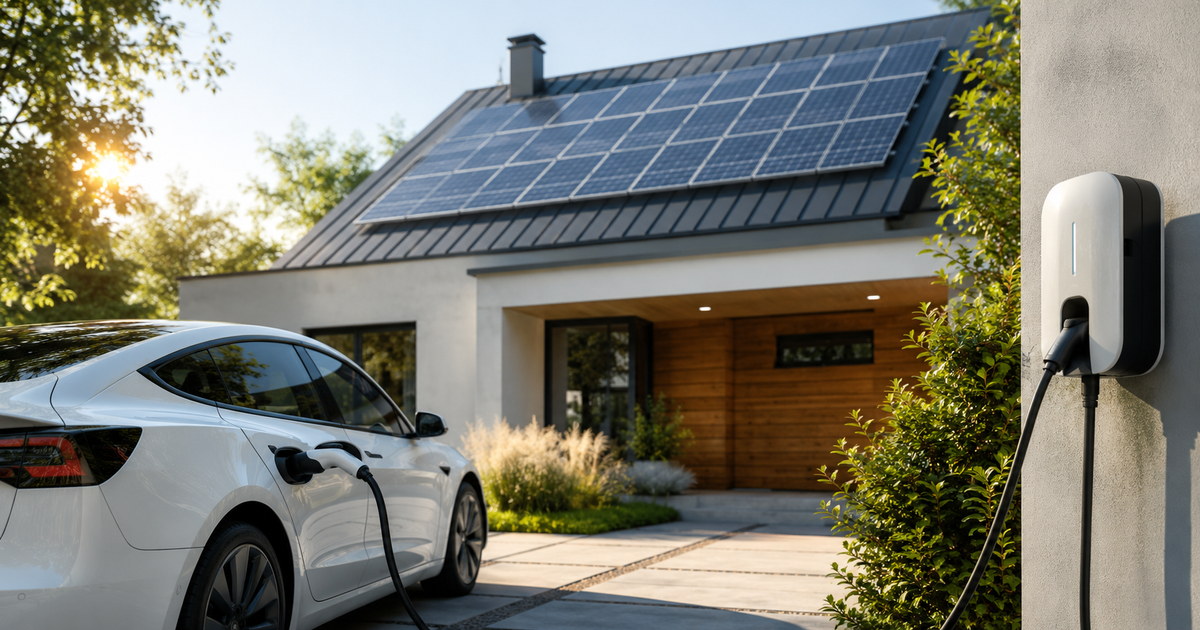
Solar panels generate electricity during daylight, and an EV is a large battery that needs charging, so using your own solar power to charge the car means cheaper, cleaner miles and less reliance on the grid. In effect, sunlight becomes fuel. The combination is one of the more satisfying parts of home energy, turning a rooftop into a personal filling station for the car.
The timing challenge
The catch is timing: solar produces most during the day, while many people charge their EV overnight when the car is home but the sun is not. Bridging that gap is the central practical question. Options include charging during the day when you are home, using a home battery to store solar energy for later, or using smart charging that prioritises solar when it is available, building on the routines in our home EV charging guide.
Smart charging and home batteries
Smart EV chargers can be set to draw from surplus solar, topping up the car when the panels are producing more than the house needs, which maximises self-consumption of your own generation. A home battery adds flexibility by storing daytime solar to charge the car in the evening, though it adds cost. Together these tools close the day-night gap, letting more of your driving run on sunshine rather than grid power.
Sizing matters
How much of your driving solar can realistically cover depends on the size of your panel system, your driving distance, and how much solar the house already uses. A modest system in a sun-poor location will offset only part of your charging, while a larger system in a sunny region can cover much of typical mileage. Being realistic about generation versus consumption avoids over-expecting what the panels will do for the car.
Tariffs and exporting
Even when you cannot charge directly from solar, the economics can still work through tariffs: exporting surplus solar to the grid and charging the car on cheap off-peak electricity, or on a tariff that rewards self-generation, can achieve much of the benefit. Understanding your electricity tariff and any export arrangements is as important as the panels themselves, since it shapes whether daytime or overnight charging is cheaper for you.
Practical considerations before you commit
Combining solar and EV charging involves upfront investment in panels, possibly a battery, and a compatible charger, plus professional installation and any permitting. The payback depends on local sunshine, electricity prices, incentives and your driving, so it is worth modelling the numbers for your situation rather than assuming. For many, the combination pays off over time and adds energy resilience, but it is a considered investment, not an automatic win.
A natural pairing, with planning
Solar and EV charging are a logical match: clean home-generated power for a clean car. The key is planning around timing, with smart charging, daytime charging or a battery, and sizing the system to your real needs and tariff. Done thoughtfully, it can meaningfully lower the cost and footprint of your driving, complementing the broader case for going electric in our EV comparison guide.
Solar plus EV checklist
Before pairing solar with EV charging:
- Plan for the day-night timing gap (daytime charging, battery or smart charging).
- Size the solar system to your driving and household use.
- Use a smart charger to prioritise surplus solar.
- Understand your tariff and any export arrangements.
- Model the payback for your location, prices and incentives.
Maximising self-consumption
To get the most from pairing solar with an EV, the goal is self-consumption, using your own generation rather than exporting it cheaply and buying it back dearer. Practical ways to do that include charging the car during sunny daytime hours when you are home, using a smart charger that automatically diverts surplus solar to the car, and, where it fits the budget, a home battery to shift daytime generation into evening charging. Timing flexible loads, including the car, to when the sun is shining turns more of your driving green and cheap. Even simple habits, like topping the car up on a sunny weekend afternoon, help. Combined with understanding your tariff, these tactics close much of the gap between when solar is produced and when the car is plugged in, building on the routines in our EV ownership guides and making the rooftop genuinely useful to the car.
Sources
- US DOE Energy Saver: electric vehicles and home charging
- US DOE Alternative Fuels Data Center: home charging
Solar output, tariffs and incentives vary widely by location. Model the costs and savings for your specific home, and use qualified installers.