Road rules, licensing, and vehicle regulations vary by country and state – always verify the requirements that apply where you drive before relying on this guidance.
Driving schools cover what passes the test. They rarely cover what keeps you alive five years into driving. The 25 tips below come from defensive-driving instructors, fleet trainers, and drivers with 30+ accident-free years. Many of these habits receive little attention during a basic driving test, yet they can improve everyday awareness and decision-making.
Things to know before you move
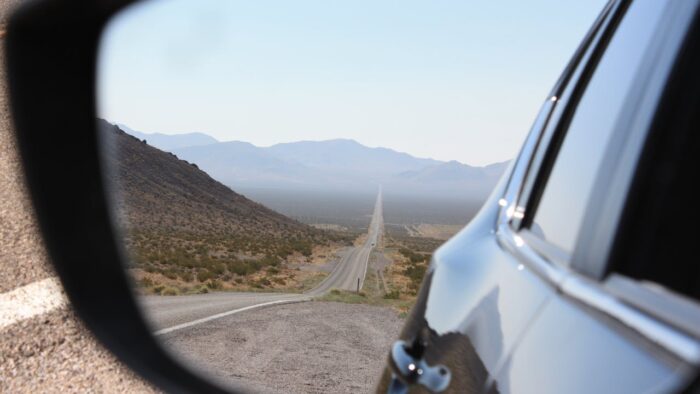
1. Adjust mirrors to eliminate blind spots
Most drivers angle side mirrors so they see the side of their own car. The correct setting shows traffic in adjacent lanes i.e. when a car passes from your blind spot, it should appear in the side mirror just as it leaves the rearview. Correct mirror adjustment can reduce the area you cannot see, but a shoulder check is still essential before changing lanes.
2. Sit closer than you think
Many new drivers sit too far back. You should reach the pedals with a slight bend in your knee, and your wrist should rest on top of the steering wheel with shoulders against the seatback. Too far back compromises emergency braking force.
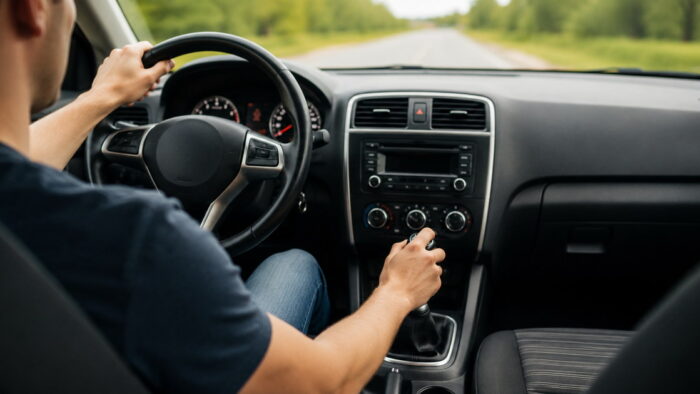
3. Both hands on the wheel
9 and 3 o’clock positions (not the old 10-and-2). Modern airbags deploy with force that breaks arms positioned at 10-and-2.
4. Headlights on whenever wipers are on
Law in many jurisdictions. Always best practice regardless. Daytime running lights aren’t enough in rain or snow. Hence your taillights must be visible.
5. Check tire pressure monthly
Underinflated tires can increase heat, wear and fuel use. Use the cold-pressure figure on the vehicle placard or in the owner manual. Recommended pressure is on the driver’s door jamb, not the tire sidewall.
On the road
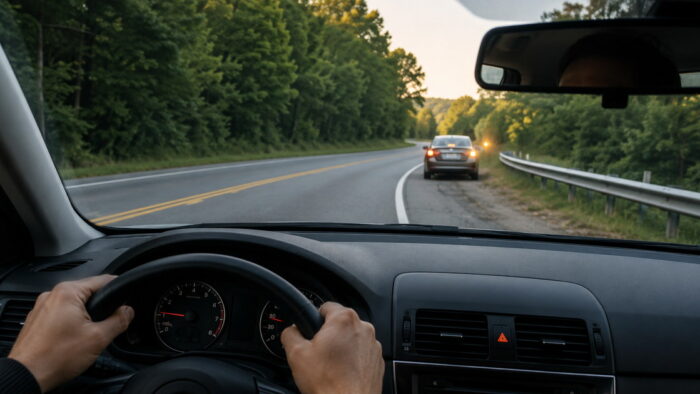
6. Following distance 3 seconds minimum
Pick a fixed point. When the car ahead passes it, count “one-thousand-one, one-thousand-two, one-thousand-three.” If you reach the point before three, you’re too close. Add a second per adverse condition (rain, fog, night, towing, unfamiliar vehicle).
7. Eyes up : look where you want to go
New drivers are usually fixated on the hood or the car directly ahead. Experienced drivers scan 12-15 seconds ahead (about 4 car lengths on city streets, much further on highways). This gives time to react to brake lights, debris, and lane changes.
8. Signal earlier than feels natural
3-5 seconds before changing lanes; longer for highway exits. Signals tell other drivers your intent because they can’t read minds.
9. Cover the brake when something feels off
If a kid’s on the sidewalk near a ball, a car is hovering at a side street, or you see brake lights ahead then move your foot to hover over the brake. Cuts reaction time by 0.5-1 second.
10. Two-second rule for stopping at intersections
Even after the light turns green, count two seconds before moving. Catches red-light runners who would otherwise hit you broadside.
Lane discipline
11. Right lane for cruising, left lane for passing
In right-hand-drive countries (US, Canada, EU continent), reverse for left-hand-drive (UK, Australia, India). The point is the same: don’t camp in the passing lane.
12. Don’t undertake (pass on the slow side)
Other drivers don’t expect it. Major source of crashes in heavy traffic.
13. Stay out of truck blind spots
If you can’t see the truck driver’s mirror, they can’t see you. Truck blind spots are bigger than most drivers realise – directly behind, directly in front (within 20 feet), and along both sides.
14. Don’t pass on the right of a turning truck
Big rigs swing wide. The right side during a right turn is where most cyclists and small cars get crushed.
15. Yield even when you don’t have to
Having the right-of-way doesn’t help you in a collision. Defensive driving means assuming others will mess up.
Speed and braking
16. Slow before the curve, accelerate through it
Braking mid-curve unloads the front tires and increases skid risk. Set your speed before turning in.
17. Brake firmly, not stomping
Modern cars have ABS wherein firm steady pressure works. Pumping the brakes is a 1970s technique that doesn’t apply anymore.
18. Engine braking on long downhills
Hold the brakes down a 5-mile mountain descent and you can overheat them to failure. Downshift to let the engine slow you.
19. Speed limits are not targets
The limit is the maximum for ideal conditions. Rain, fog, traffic density, and unfamiliar roads all warrant going slower.
20. Match speed to merging traffic
Entering a highway at 35 mph in 70 mph traffic causes crashes. Accelerate to roughly matching speed before the merge.
Hazards and distractions
21. Phone in the glove box on long drives
Hands-free is still distracted. Studies consistently show phone conversations, even hands-free lessen reaction time similarly to mild alcohol impairment.
22. Don’t eat behind the wheel
Pull over for 5 minutes. Food spills and the impulse to clean them up are common crash causes.
23. Adjust music and navigation before moving
Voice control for adjustments en route. Otherwise pull over.
24. Watch for kids near schools, parks, ice cream trucks
They dart unexpectedly. Slow well below the limit in these zones even if you have green lights.
25. Get more sleep before long drives
Fatigue at 18 hours awake is equivalent to legal-limit alcohol impairment in reaction studies. Stop every 2 hours; share driving on long trips.
Habits worth carrying into every drive
These habits aren’t about passing the test but about driving 50+ years without putting yourself or anyone else at risk. Hence it’s important to build them early as they cost nothing yet pay back across every mile you’ll ever drive. verify local traffic laws with your DMV / DVLA / RTA as specific rules vary by jurisdiction.
Disclaimer: This is general guidance, not certified driving instruction.
Useful next reads
How to Drive Safely in Heavy Rain, Common Highway Driving Mistakes (and How to Fix Them), Long Distance Driving Checklist.
Sources and Further Reading
- NHTSA safe driving guidance
- NHTSA TireWise safety guidance
- NHTSA: Ten Tips for Safe Driving
- NHTSA TireWise
Use the linked safety guidance alongside the road rules and licence conditions that apply where the new driver will practise.