Road rules, licensing, and vehicle regulations vary by country and state – always verify the requirements that apply where you drive before relying on this guidance.
Fog removes the one thing driving depends on most: the ability to see what is ahead. It is consistently linked to serious multi-vehicle pile-ups, almost always because drivers travel too fast for how far they can actually see. The techniques are simple, and the most important one is restraint.
Slow down to match your visibility
The single rule that prevents most fog crashes is to drive only as fast as you can stop within the distance you can see. If visibility is a few car lengths, your speed must be low enough to stop in that space, regardless of the posted limit. Pile-ups happen when a line of cars all drive faster than they can see and stack into whatever stops ahead, so your speed is your main safety margin.
Use low beams, not high
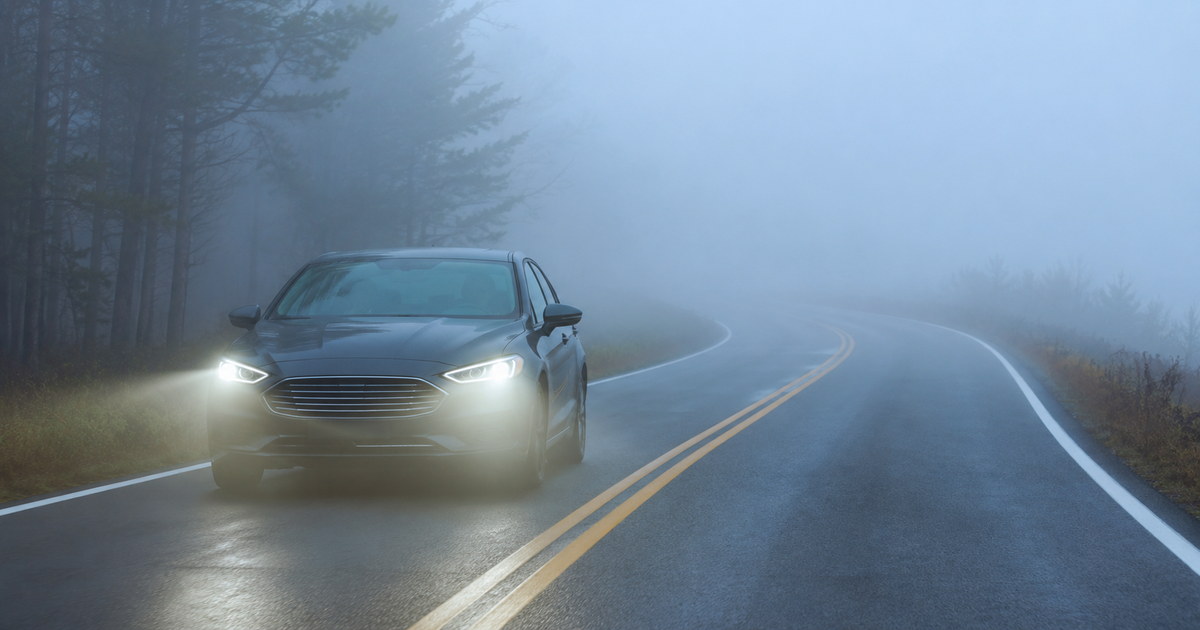
It feels natural to switch on high beams in fog, but it backfires: the bright light reflects off the water droplets and bounces back as glare, making visibility worse. Use low-beam headlights, which aim down at the road, and fog lights if your car has them. Daytime fog still calls for headlights, both to see and, just as importantly, to be seen by others.
Increase your following distance
Because you can see less far, you need far more room to react, so lengthen your following distance well beyond normal. Tailgating in fog is how rear-end chains begin. Leaving a generous gap also means that if the car ahead brakes suddenly for something you cannot yet see, you have the space to respond calmly, the same principle behind avoiding the common highway mistakes.
Use the road edge as a guide
When visibility is very poor, use the right-edge line or roadside markings as a reference to keep your position, rather than fixing on the centre line, which can pull you toward oncoming traffic. Keep your windscreen clear inside and out, since fog encourages condensation, and use demisters and wipers as needed. A clean screen and a steady reference line keep you tracking safely when you can barely see ahead.
Make yourself predictable
In fog, other drivers see you late, so behave predictably: brake gently and early to give following traffic more warning, signal in good time, and avoid sudden lane changes. If you must slow sharply, a light tap of the brakes earlier can warn those behind. The aim is to give everyone around you the maximum time to react to what little they can see, much as our wet-weather driving guide advises for rain.
Avoid stopping in a live lane
If fog becomes too thick to continue safely, do not stop in a traffic lane, where you become an invisible obstacle others may hit. Instead, pull well off the road into a safe area, such as a rest stop or car park, and wait for conditions to improve, switching on hazard lights only once safely stopped off the carriageway. Sometimes the safest driving decision in heavy fog is to stop driving for a while.
Plan around it
Fog is often predictable, forming in valleys, near water, and in the early morning and evening, so check forecasts and allow extra time when it is likely. Treating a foggy stretch as a reason to slow right down and add space, rather than something to push through, prevents the chain-reaction crashes fog is notorious for. Patience costs minutes; impatience in fog can cost far more.
Fog driving checklist
When fog rolls in:
- Slow down so you can stop within the distance you can see.
- Use low beams and fog lights; never high beams.
- Increase your following distance well beyond normal.
- Use the right-edge line to guide your position; keep the screen clear.
- If it’s too thick, pull well off the road and wait, hazards on.
Beware patchy fog
Fog is rarely uniform; it often comes in patches, thick in dips and near water, then briefly clearing. The danger is speeding up the moment it thins, only to plunge back into a dense bank with no warning and no time to slow. Treat clear gaps with suspicion and keep your speed moderate until you are sure the fog has genuinely lifted, rather than accelerating and braking repeatedly. Patchy fog also means other drivers ahead may brake suddenly as they hit a thick bank, so the extra following distance you have left becomes especially valuable. Staying at a steady, cautious pace through a foggy stretch, instead of surging through the clear bits, is both smoother and far safer, and it removes the temptation that causes many fog pile-ups.
Related guides
Sources
- The Highway Code: driving in adverse weather, rules 226-237 (UK)
- National Weather Service: fog safety
Conditions vary. In severe fog, reducing speed and, if necessary, stopping somewhere safe always takes priority over keeping to a schedule.