Car rental insurance is not one product. The counter may offer several waivers and policies, while a personal motor policy, travel policy or payment card may provide different protection. The useful question is not “Do I have insurance?” but “Which losses are covered, by whom, and under what conditions?”
Damage to the rental vehicle
A collision or loss damage waiver may reduce the renter’s financial responsibility for damage or theft. It is usually a contractual waiver from the rental company rather than ordinary motor insurance. Read the exclusions for tires, glass, roof, underbody, keys, incorrect fuel, unauthorised roads and drivers.
Liability to other people
Liability protection deals with injury or property damage caused to someone else. The amount included with the rental depends on the country and agreement. A damage waiver for the rental car does not necessarily provide adequate third-party liability.
Medical and personal belongings
Personal accident and personal-effects products may overlap with health, travel, life, home or renters insurance. Check whether those policies apply in the destination and whether the limits, excess and claim process are suitable. Valuable items should not be left visible in a parked car even when some cover exists.
Coverage you may already have
- Personal motor insurance: Ask whether it extends to a temporary rental, the destination and the vehicle class.
- Payment card benefits: Confirm that the booking and deposit must be paid with the card and whether the cover is primary or secondary.
- Travel insurance: Check rental-vehicle excess, liability and excluded activities separately.
- Employer policy: Business travel may have different rules for authorised bookings and drivers.
Questions to ask in writing
- What event activates the cover?
- What is the renter still expected to pay?
- Are loss of use, towing, administration and diminished value included?
- Which roads, countries, drivers and vehicle types are excluded?
- Who handles the claim and what evidence is required?
- Does the provider pay the rental company directly or reimburse the renter later?
Do not rely on the counter summary
Counter staff may explain the product clearly, but the signed agreement controls the rental. Read the key terms before travel when possible. If a card or insurer provides cover, save the benefit guide and a contact number offline.
Document the vehicle and the claim
Photograph the vehicle at pickup and return, report damage through the required channel and keep police or incident records where applicable. Do not authorise repairs or admit liability unless the agreement or insurer instructs you to do so.
A simple decision process
List the risks, confirm existing protection and buy only the additional cover needed to close important gaps. The right choice depends on the destination, vehicle, driver and willingness to handle a claim – not on a universal rule to always accept or always decline the counter offer.
Watch for conduct that can void protection
Even broad cover may fail when the agreement is broken. Common issues include an unlisted driver, driving while impaired, taking the car onto a prohibited road, leaving keys unsecured, crossing a border without approval or returning after the authorised period. Read these conditions before the trip so the driver is not learning them after an incident.
Understand the excess and security hold
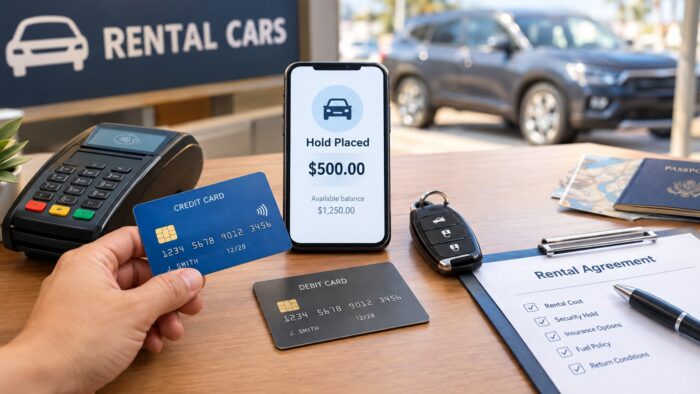
The excess is the amount the renter may remain responsible for under the cover. The security hold is an amount reserved on the payment card during the rental. They are related but not the same. A lower excess does not always mean a smaller hold, and a card benefit may reimburse later rather than preventing the rental company from charging first.
What to do after an incident
- Protect people and contact emergency services when required.
- Follow the rental company’s reporting instructions.
- Exchange information without admitting fault.
- Photograph the scene and vehicle where it is safe.
- Keep reports, receipts and correspondence.
- Notify the outside insurer or card provider within its deadline.
A calm record of events is more useful than a rushed explanation at the return desk.
Keep the policy language with the booking
Save the relevant policy page or benefit guide, not just a screenshot that says “rental cover included.” The full wording should show eligible countries, vehicle types, rental duration, exclusions and claim deadlines. If the cover depends on paying with a particular card, keep proof that the booking and deposit used that card.
When two policies may respond, ask which one is primary and whether one provider expects the other claim to be completed first. That detail can affect how quickly money is recovered after an incident.
Other guides worth opening
- Airport Car Rental Mistakes to Avoid in 2026
- How to Rent a Car Internationally: A Practical Guide
- Cargo Van Rental Guide for Moving and Business Use
Related guides
Sources and Further Reading
Insurance terminology is not identical across providers. Read the policy and rental agreement together before accepting or declining cover.