Road rules, licensing, and vehicle regulations vary by country and state – always verify the requirements that apply where you drive before relying on this guidance.
The quoted price is rarely the only thing that touches your card when you pick up a rental. Almost every company also places a hold on it – money that is not taken, but that you cannot spend either. It catches people out most often on holiday, when the card being held against is the same one paying for everything else that week. Here is what the hold is for, how to keep it small, and why the card you hand over matters more than most people expect.
What a hold actually is
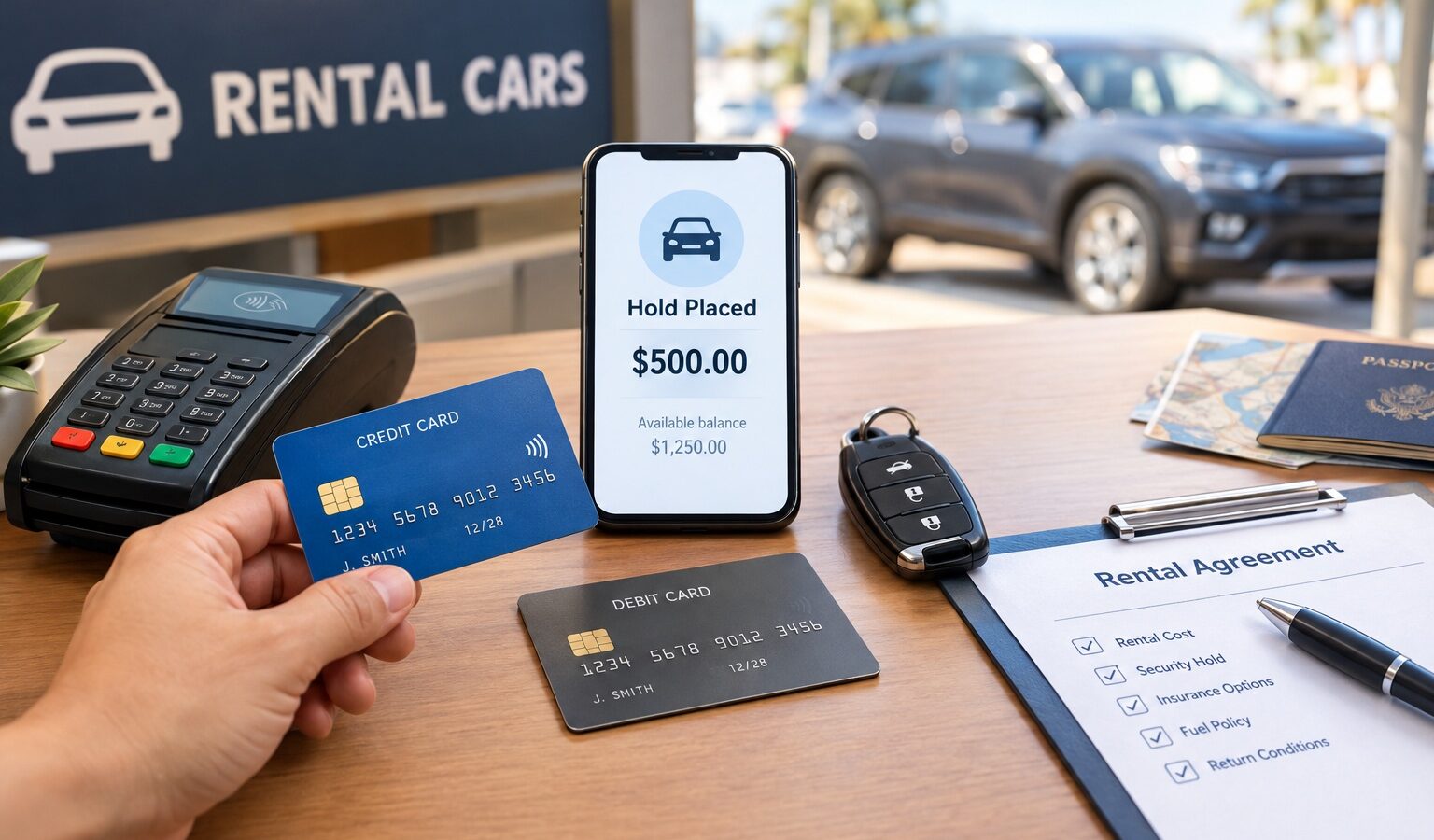
A hold, sometimes called a block or a pre-authorisation, is the rental company reserving an amount on your card against charges that have not happened yet: damage, a missing fuel top-up, a toll, a late return, a parking fine that arrives weeks later. The US Federal Trade Commission describes it plainly – most rental companies place a hold on your debit or credit card for more than the agreed rental cost.
The money is not taken. It is ring-fenced. The practical effect is the same, though: for as long as the hold sits there, that amount is gone from what you can spend.
Why the size of the hold matters more than the cost
A hold is typically the rental cost plus a buffer, and the buffer is set by the company and the vehicle, not by you. A modest rental can carry a hold several times its own value, particularly on a larger vehicle or when you decline the company’s damage waiver.
The FTC makes the consequence explicit: if your balance is low, your card could be declined for other purchases. That is the real risk – not the cost of the rental, but discovering at a restaurant three days later that your card will not authorise.
Credit card versus debit card at the counter
Both are usually accepted, but they behave differently under a hold, and that difference is the whole argument.
A hold on a credit card consumes part of your credit limit. Annoying if the limit is tight, but it is not your own money. A hold on a debit card takes the funds out of your current account balance. You are lending the rental company your own cash for the duration, and you do not get it back the moment you hand the keys over.
Debit cards also attract extra conditions at many companies – a credit check at the desk, proof of a return travel booking, a larger hold, or a refusal to release certain vehicle classes. None of that is universal, which is exactly why it needs checking before you book rather than discovered at the counter.
How long the hold takes to clear
Releasing a hold is not instant and it is not really in the rental company’s hands once they have done their part. They notify the card issuer; the issuer releases the funds on its own timetable, which is commonly a few working days and can be longer across weekends and public holidays.
On a credit card, a slow release is a nuisance. On a debit card at the end of a trip, it can mean a chunk of your balance is still unavailable after you have flown home.
Keeping the hold as small as possible
- Ask what the hold will be before you book, not at the desk – it is a fair question and a company that will not answer it is telling you something.
- Use a credit card if you have one, and one that is not also your main spending card for the trip.
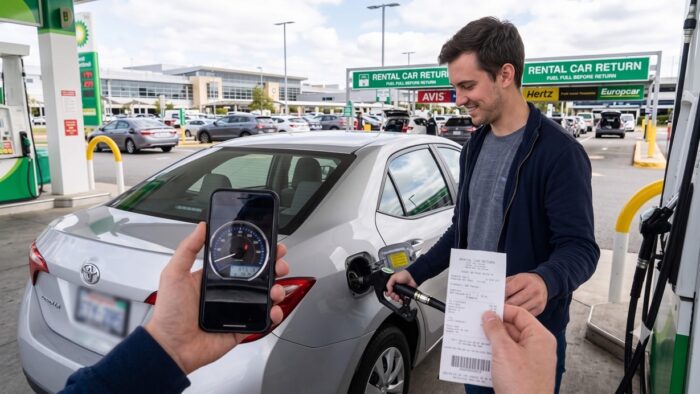
- Settle tolls and fuel yourself rather than leaving them to be charged afterwards, which shortens the tail of possible charges.
- Get the final invoice before you leave the return desk, and keep it until the hold has actually cleared.
- If a charge does appear that you did not expect, the invoice and your own collection photographs are what you argue from.
If a debit card is your only option
It is workable, but plan for it. Check the specific branch’s debit policy in writing before booking – policies vary by location, not just by company, and airport branches are often stricter than city ones. Make sure the account has considerably more in it than the rental costs. And take the damage waiver seriously: declining cover usually increases the hold, which is the opposite of what you want if the funds are coming out of your own balance.
Before you get to the counter
Five minutes of checking removes almost all of the friction here. Know what the hold will be, know which card you are using and why, know what the excess is if something goes wrong, and know what the company will charge you for if you bring the car back differently from how you took it.
The card question is worth settling first because everything else – the size of the hold, the conditions attached, how fast you get your money back – follows from it.
Related guides
- Car Rental Insurance Explained: What You May Need
- Airport Car Rental Mistakes to Avoid
- How to Rent a Car Internationally
- Long-Term and Monthly Car Rentals: A Guide