Road rules, licensing, and vehicle regulations vary by country and state – always verify the requirements that apply where you drive before relying on this guidance.
Fuel is where a cheap rental quietly stops being cheap. The headline rate is competitive precisely because the company expects to make margin somewhere else, and the fuel policy is one of the easiest places to do it. There are only a few policies in common use, and once you can recognise which one you have been given, the decision is straightforward.
Full-to-full, the one to look for
You collect the car with a full tank and return it full. You buy your fuel at ordinary pump prices from whichever station you like, and the company charges you nothing for fuel at all.
This is the fairest of the policies and usually the cheapest, because you are paying the market rate rather than a rate the rental company sets. The only work it asks of you is finding a station near the return point and keeping the receipt.
What happens if you bring it back short
On a full-to-full rental, returning the car less than full is the expensive mistake. The company refuels it and charges you their rate, and the US Federal Trade Commission notes that this is usually more expensive than what you would pay at a local station.
There is often a service or refuelling fee on top of the fuel itself. That combination is why a quarter of a tank left in the car can cost more than the fuel is worth.
Pre-purchase fuel, and when it is a trap
Here you buy a full tank up front at the counter and return the car as empty as you dare. It is sold on convenience: no stop on the way back, no receipt to keep.
The FTC is direct about the economics – prepaid fuel could be a lot more expensive than filling up yourself. The structural problem is that you are buying a whole tank whether you use it or not, and any fuel left in the car when you return it is simply a gift to the rental company. It only makes sense if you are genuinely confident of running the tank close to empty, which almost nobody does, because nobody wants to risk it.
Same-to-same and part-tank policies
Some companies hand the car over with a part tank – a half or a quarter – and ask for it back at the same level. It sounds reasonable and it is harder to get right than full-to-full, because fuel gauges are not precise and “about a quarter” is a matter of opinion when there is a charge attached to the answer.
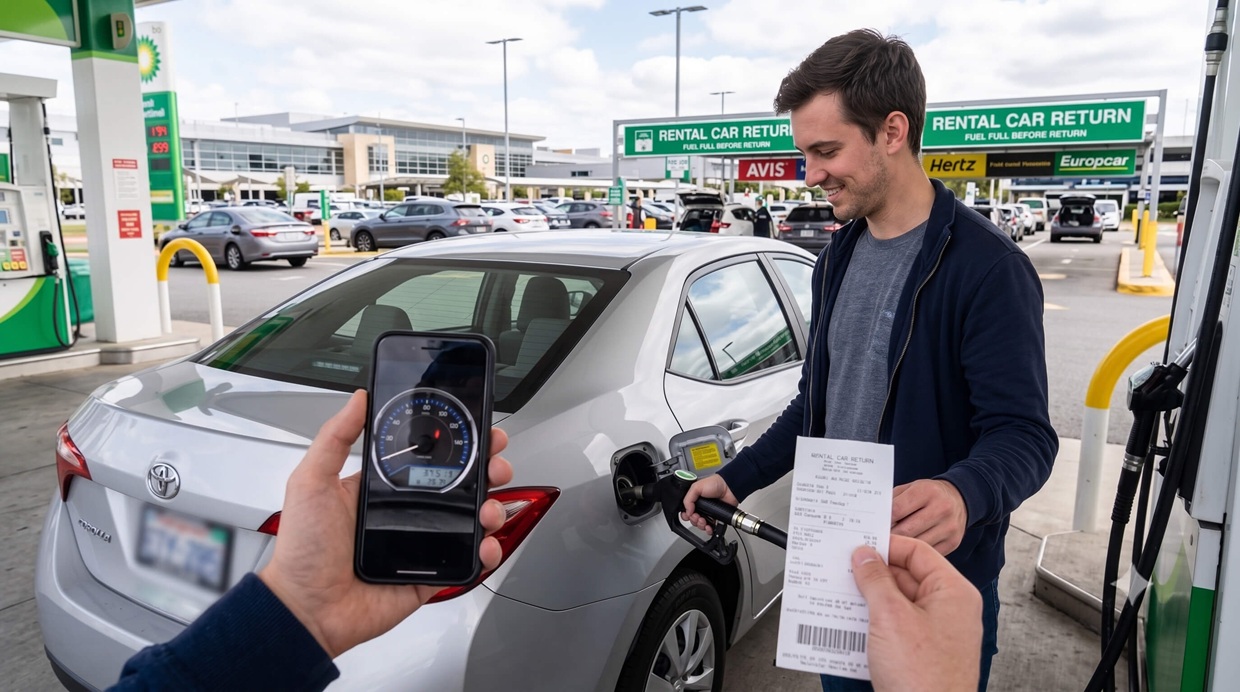
If you are given one of these, photograph the gauge at collection with the odometer visible in the same frame, and photograph it again at return. That is the only way the conversation is about evidence rather than recollection.
Reading the policy before you book
The policy is usually named in the booking terms rather than explained, so learn the labels. Full-to-full is what you want. Pre-purchase, prepaid or full-to-empty means you are buying a tank at their price. Anything describing a part tank means you need photographs.
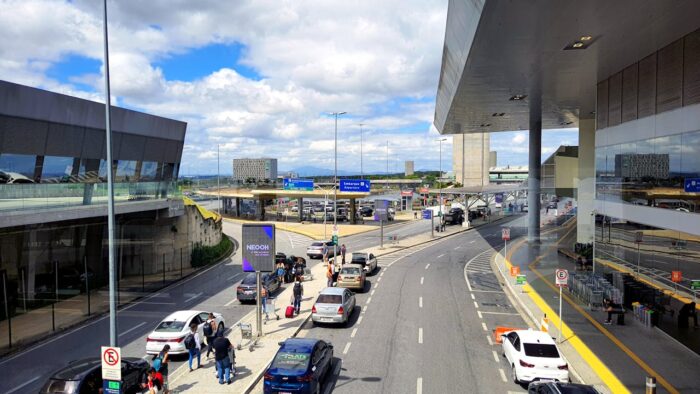
Check where the nearest station to the return point is at the same time. Airport return areas are often surrounded by stations that know exactly why you are there, and the price reflects it – filling up a few kilometres out is routinely cheaper.
What to keep as proof
- The final fuel receipt, with the date, time and location on it.
- A photograph of the fuel gauge and odometer at collection.
- The same photograph at return, before you hand the keys over.
- The closing invoice from the desk, which should show no fuel charge on a full-to-full rental.
Keep all four until the hold on your card has cleared. Fuel charges are one of the more common items to appear after the fact, and they are much easier to dispute with a timestamped photograph than without one.
Which policy to choose
If full-to-full is offered, take it and plan a fuel stop into the return journey. If only pre-purchase is available, price the tank against what the fuel would cost at the pump and treat the difference as the real cost of the convenience. If the policy involves a part tank, take photographs and expect to need them.
None of this is complicated, but it is decided at booking rather than at the desk – by the time you are at the counter with a queue behind you, the policy is already set.
Related guides
- Airport Car Rental Mistakes to Avoid
- Rental Car Deposits and Holds: Which Card to Use and Why
- Car Rental Insurance Explained: What You May Need
- Best Fuel-Saving Driving Habits