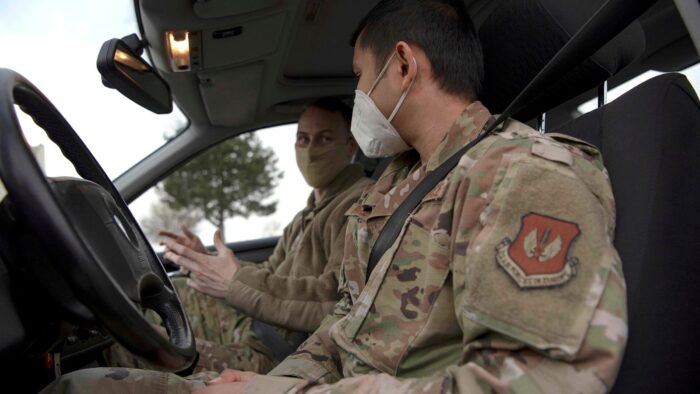
Take your driving test in the car you have had the most recent lessons in. For most learners that is the instructor’s car: you know its clutch, mirrors and reference points, it already meets the test requirements, and it has dual controls. You can use your own or a family car if it meets your test authority’s rules, which typically cover roadworthiness, insurance for the test, a clear view for the examiner, and required fittings such as an extra interior mirror and L plates where those apply. Check the official list for your country before test day, because an unsuitable car means a cancelled test and a lost fee.
Instructor’s car or your own?
| Instructor’s car | Own or family car | |
|---|---|---|
| Familiarity | High if you learned in it | High only if you have practised in it a lot |
| Meets test rules | Already set up | Your job to check every requirement |
| Insurance for the test | Covered by the instructor | Confirm in writing with the insurer |
| Dual controls | Yes | No |
| Cost | Usually a fee for the test slot and a warm-up lesson | No hire fee |
| Risk on the day | Low | A warning light, bald tyre or missing mirror can stop the test |
| Best when | You took most lessons with an instructor | You learned mainly in this car and it is fully compliant |
Learners agonise over routes and manoeuvres, then treat the choice of test car as an afterthought. It deserves better: the car you take decides your comfort, your margin for error, and even whether the test starts at all, because a car that fails the examiner’s checks ends the attempt on the spot, fee gone. Here is how to choose well, and what the rules actually require.
The Non-Negotiable Requirements
Whatever car you bring must be roadworthy and legal: taxed, insured for the test (some learner policies exclude the practical, check explicitly), with a valid MOT where applicable, L plates front and rear, an extra interior mirror for the examiner, and working seatbelts and head restraints. Tyres need legal tread with no damage. The car must also be smoke-free and reasonably clean inside. Examiners do a walk-around before you drive; dashboard warning lights, a cracked windscreen in the swept area, or a brake light out can cancel the test immediately.
Option One: The Instructor’s Car
Taking the test in the car you learned in is the default for good reason. You know its biting point, its mirrors, its blind spots, its turning circle; thousands of your repetitions live in that exact machine. It is dual-controlled, which changes nothing about marking but reassures some candidates, and it is guaranteed to meet every requirement because it does this weekly. The costs: you usually pay for the instructor’s time on test day, car hire plus the warm-up lesson, and some learners feel test-day pressure knowing the instructor waits at the centre. For most people, this is still the right answer.
Option Two: Your Own or the Family Car
Testing in the car you will actually drive afterwards has a quiet logic: pass in it, then drive it home with no transition. It suits learners who did substantial private practice in that car. The checklist above becomes your responsibility, insurance for the test being the item most often missed, and the car should be honestly suitable: a small or mid-size hatchback with light controls and good visibility serves far better than a large SUV, a van-shaped blind spot collection, or an old car with a heavy clutch. If the family car is an automatic, remember the licence consequence: pass in it and you hold an automatic-only licence.
What Actually Matters in a Test Car
- Familiarity above everything. A hundred hours in an average car beats five hours in a perfect one. Book the test in whichever car holds your practice history.
- Visibility. Thin pillars, a big rear window and sane mirror sight lines remove faults before they happen, especially on reversing manoeuvres.
- Light, predictable controls. A forgiving clutch, progressive brakes, steering that self-centres honestly.
- Size, within reason. Compact cars make bay parking and tight junctions kinder, but do not swap into an unfamiliar small car the week before the test; the familiarity loss outweighs the size gain.
- Hill-start assist and parking sensors are allowed and fine, though sensors will not save a manoeuvre done without observation, which is what is actually being marked.
The Week Before: No New Variables
Whatever you choose, lock it in at least two weeks out and do your final lessons and mocks in that exact car. Adjust and memorise your setup, seat, mirrors, head restraint, so test-morning setup is a 30-second ritual rather than a fiddle. Fuel it, clean it, and run the light-check walk-around the evening before: lights, indicators, brake lights, tyres, washer fluid, no warning lamps. A borrowed cousin’s car collected the night before the test is how avoidable cancellations happen.
If the Examiner Refuses the Car
It happens: a blown bulb, a bald tyre, missing L plate, invalid insurance. The test is cancelled and the fee is normally lost, but the lesson is cheap compared to the alternative of discovering the fault at speed. Keep spare bulbs where the car allows, and treat the pre-test checklist with the same seriousness as the manoeuvres.
The Bottom Line
Take the test in the car that holds your practice hours, make sure it is legal, insured for the test and fault-free on the morning, and resist every late temptation to upgrade into something newer, smaller or cleverer. On test day, boring familiarity is the performance enhancer.
Instructor’s Car or Your Own: The Real Trade
Taking the test in the instructor’s car buys familiarity, dual controls that reassure (the examiner, too), and certainty that the car meets every test requirement. Taking it in your own car means passing in the machine you will actually drive alone the next day, which smooths the scariest transition in the whole process. The deciding factor is practice hours: test in whichever car holds most of your recent hours. If that is the family car, verify the legal checklist early, extra mirror fitted, L plates, insurance covering a test, head restraint and working seatbelt for the examiner, because discovering a problem on the morning cancels the test and forfeits the fee.
Does car size change pass chances?
Not in the examiner’s scoring, but it changes yours. A small hatchback forgives positioning errors in bay parking and narrow-road passes that a wide SUV punishes. If your own car is large, spend extra sessions on the manoeuvres in it rather than switching cars test week; consistency beats dimensions, as the preparation sequence in our test guide emphasises.
Related guides
- Driving Theory Test: Revision Plan That Works
- Driving Test Faults: Majors, Minors and Common Fails
- Driving Test Anxiety: Calming Techniques That Hold Up
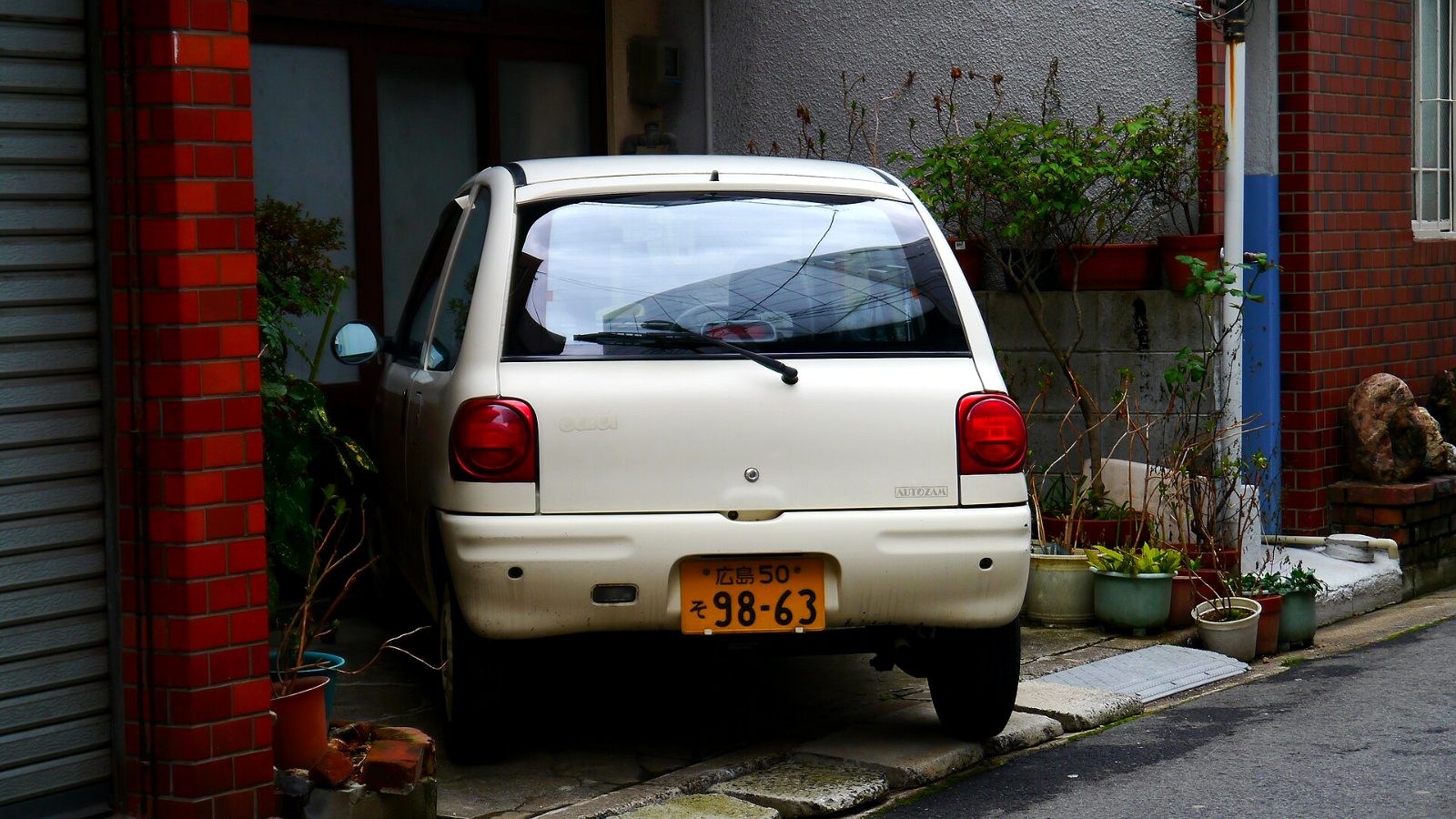
Featured image: Hiroshima City Japan (). Photo: Mic from Reading – Berkshire, United Kingdom (CC BY 2.0), via Wikimedia Commons.