Summer brings its own driving risks: heat stresses tyres, cooling systems and batteries, glare hides hazards, and holiday traffic adds tired drivers on unfamiliar roads. Check tyre pressures when cold, since under-inflated tyres overheat and fail at speed. Check coolant, carry water, and keep sunglasses in the car. Never leave children or pets in a parked car, even briefly: the interior temperature climbs dangerously within minutes.
Hazards and precautions
| Hazard | Why it matters | Precaution |
|---|---|---|
| Tyre blowouts | Heat plus low pressure or heavy loads | Check pressures cold; inspect for damage; respect load limits |
| Engine overheating | Hard work in traffic and on hills | Check coolant; if the gauge rises, turn off the air conditioning and stop safely |
| Battery failure | Heat shortens battery life | Test a battery older than three years |
| Glare | Low sun at dawn and dusk; dirty glass | Clean the screen inside and out; sunglasses; use the visor |
| Driver fatigue and dehydration | Long holiday drives in heat | Break every two hours; drink water |
| Hot cabin | Rapid, dangerous temperature rise when parked | Never leave children or animals inside |
| Slippery roads after dry spells | Rain on oil and rubber build-up | Slow down in the first rain |
| More cyclists, motorcyclists and pedestrians | Good weather | Look twice at junctions; pass with space |
| Loaded roof boxes and trailers | Longer stopping distance; higher centre of gravity | Reduce speed; check fixings |
Winter gets the warnings, but road casualty curves in many countries peak in summer: more trips, more fatigue, more unfamiliar roads, and a set of hazards that hide behind good weather. Heat degrades both cars and judgement, glare blinds as effectively as fog, and the holiday season loads vehicles and schedules past their margins. Here is the summer playbook, equally relevant to a UK heatwave or an Australian road trip.

Heat and the Car
- Tyres fail more in summer. Heat raises pressure and accelerates the failure of weak or underinflated tyres; the motorway blowout season is summer. Check pressures cold, monthly and before long trips, loaded pressures when the car is full, and inspect for cracking on older tyres.
- Cooling systems meet their test. Coolant level and condition, drive belts and the radiator’s airflow matter now. If the temperature gauge climbs in traffic: heater on full (it is a second radiator), fans on, and stop safely if it keeps rising. Never open a hot radiator cap.
- Batteries die in summer too. Heat evaporates electrolyte and cooks weak cells; the battery that struggles in August often fails completely the following winter, or sooner.
- Cabin heat is a safety item. A parked car in sun reaches dangerous temperatures in minutes. Never leave children or animals in a parked car, even briefly, even shaded; shade windscreens, and air the car before loading passengers.
Heat and the Driver
Driver performance degrades measurably in hot cabins: reaction times lengthen and irritability climbs well before you feel unwell. Pre-cool the car, keep water aboard for everyone, and treat air conditioning as safety equipment rather than luxury. Dehydration mimics fatigue, and the two stack; on long summer drives, the afternoon drowsiness window hits harder. The fixes are the standard fatigue set, breaks every two hours, the caffeine nap, honest abandonment of schedules, applied more strictly, not less, because holiday eagerness argues for pushing on.
Glare: The Bright-Weather Fog
Low morning and evening summer sun, plus heat shimmer and chrome reflections, can erase hazards from view exactly at commuting and touring hours. Sunglasses live in the car, the windscreen stays clean inside and out because film turns glare into whiteout, and the visor gets used aggressively. When blinded, slow smoothly and open the following gap; when the sun is behind you, assume oncoming drivers cannot see you and position accordingly. Transition moments, tunnel exits, tree-lined roads breaking into open sun, deserve a half-second of expectation.
Holiday Traffic and the Loaded Car
- Load legally and low. Heavy items over the axle, nothing loose in the cabin (an unsecured tablet becomes a projectile in a stop), sight lines kept, and the tailgate able to close properly. Check the handbook’s load and roof limits; roof boxes change the car’s height, thirst and crosswind manners.
- Adjust for the weight. A loaded car brakes longer, corners lazier and overtakes slower. Add following distance and retire the empty-car overtaking judgement for the trip.
- Plan around the peaks. Changeover Saturdays, bank holidays and event weekends are predictable; leaving three hours earlier or later routinely halves journey stress. Congestion itself breeds the crash types of boredom: tailgating, late braking, phone temptation.
- Share long hauls and declare the schedule flexible. The family announcement that arrival time does not matter is a genuine safety intervention.
Summer’s Sudden Weather
Heatwaves end in storms. The first rain after a dry spell lifts accumulated oil and rubber into a uniquely slick film, treat the first wet hour like ice, and summer downpours bring aquaplaning: if the steering goes light, ease off the accelerator smoothly and steer gently until the tyres bite. Hail and flash flooding call for parking out of the storm where possible; never drive into floodwater of unknown depth, as the engine and the family are both cheaper to delay than to recover.
The Summer Kit
Water for everyone plus a reserve, sunscreen and hats, the phone charger, sunglasses, a basic first-aid kit, and in remote-touring country, extra fuel margin and offline maps. Breakdown kit stays aboard year-round; summer adds only shade and water to the waiting-for-recovery scenario, but they are the items that make it safe.
The Bottom Line
Check tyres and coolant before the season, keep the cabin cool and the driver watered, respect glare like fog, load the car low and legal, and let the schedule bend. Summer driving is the pleasant kind when the margins are kept, and the margins are cheap.
Heat Is a Mechanical Stress Test
Summer quietly runs every weak component to failure. Underinflated tyres flex and overheat, and blowouts spike in heat waves; check pressures cold, monthly minimum, per the routine in our tyre guide. Batteries actually die from summer heat more than winter cold, the cold start merely reveals the damage; a battery past four years deserves a pre-summer test, as covered in battery warning signs. Coolant systems meet their reckoning in jams on hot days, so a creeping temperature gauge plus air conditioning off and heater on full is the escape protocol every driver should know before needing it.
What about glare, the invisible hazard?
Low morning and evening summer sun blinds exactly at commute times. Keep the windscreen clean inside and out, because film and scratches scatter light into a white sheet; replace streaking wipers per the wiper guide; keep sunglasses in the car, not the house; and when blinded, back off the car ahead rather than squinting at its bumper. Four seconds of following distance is the difference between a scare and a claim.
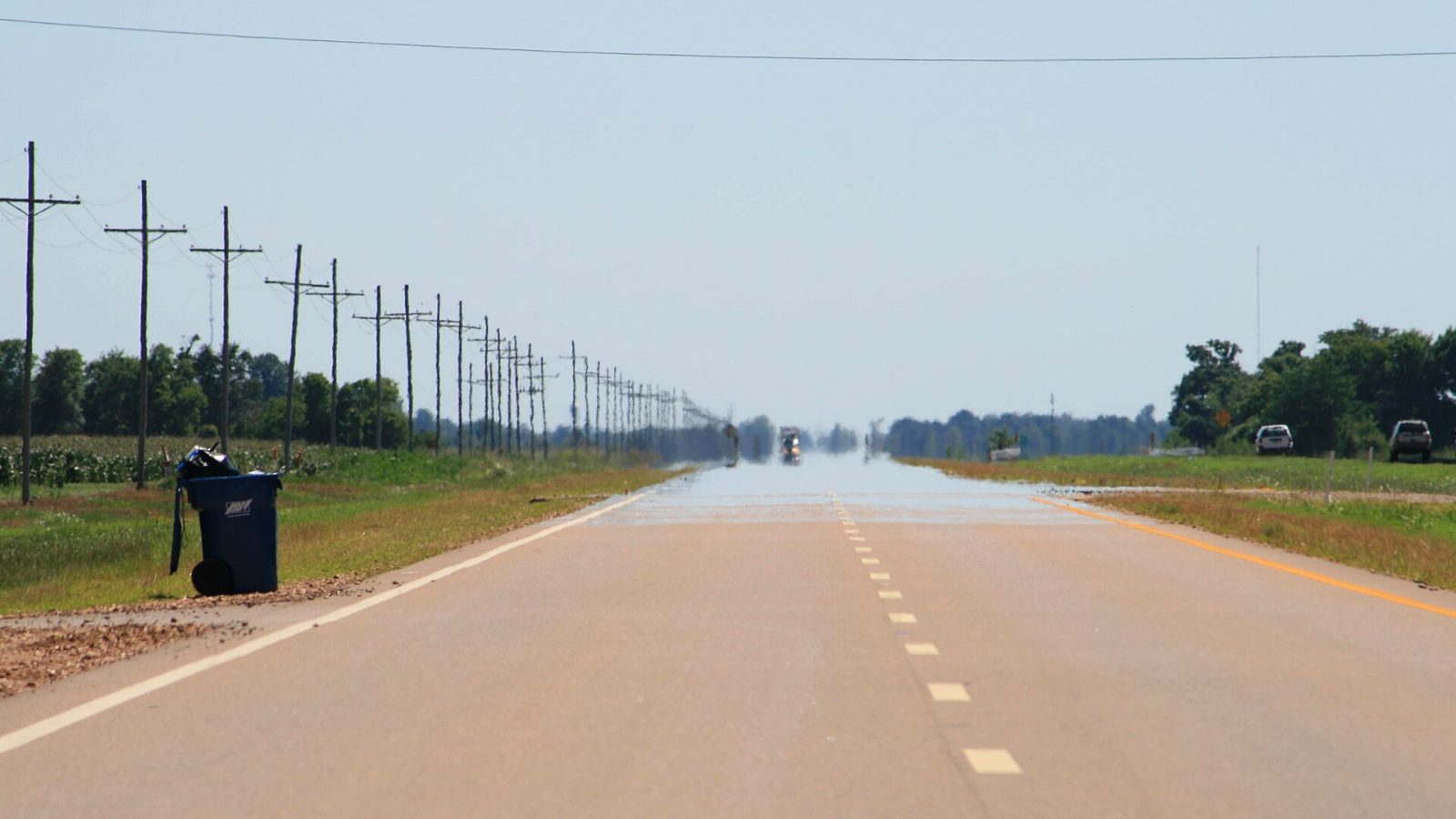
Featured image: Truck approaching in Mississippi. I was driving on this straight road myself saw the big truck in the mirror speeded up to increase the distance and stopped to take the photo. (). Photo: Jeroen Komen from Utrecht, Netherlands (CC BY-SA 2.0), via Wikimedia Commons.