Private practice is the great accelerator of learning to drive: hours behind the wheel with a parent or friend supervising cost a fraction of professional lessons and cement what the instructor teaches. The catch is insurance. A learner driving any car on the road needs valid cover, and assuming the family policy quietly handles it is one of the expensive mistakes in the learning journey. Here is how learner cover actually works, in plain language and for general guidance; policies differ, so always confirm details with the insurer.
The Baseline Rules
A learner practising privately must hold a provisional licence, display L plates, and be supervised by a qualified adult who meets the rules, typically someone over 21 who has held a full licence for at least three years. On top of that sits insurance: either the car’s existing policy must cover the learner, or the learner needs their own policy. Driving uninsured, even accidentally, risks fines, penalty points on the provisional licence before it is even full, and possible seizure of the car, so this is worth getting right rather than guessing.
The Three Ways to Get Covered
1. Named driver on the car’s policy
The traditional route: the car owner adds the learner to their existing policy. It is simple and keeps everything in one place. The downsides: it can raise the owner’s premium, and critically, any claim the learner causes typically lands on the owner’s policy, affecting their no-claims bonus. Parents often accept this trade for the simplicity.
2. Standalone learner driver insurance
A separate temporary policy in the learner’s own name, covering them to drive a specific car they do not own. Its defining virtue: it sits alongside the owner’s policy, so if the learner has a mishap, the claim goes through the learner’s policy and the owner’s no-claims bonus stays intact. Policies run from a single day to several months and can usually be renewed, which suits the realistic multi-month learning timeline.
3. Cover on the learner’s own car
If the learner has bought their own first car, they insure it with an annual provisional-licence policy. When they pass, they must tell the insurer immediately; the policy converts, and the premium usually changes, because statistically the riskiest period of a driving life begins the day after the test.
What It Costs and What Moves the Price
Learner cover is cheaper than new-driver cover, supervision genuinely reduces risk, and insurers price it accordingly. Expect costs to scale with the car’s insurance group, the learner’s age, the cover length, and location. The practical money advice: insure a modest, small-engined car for practice, compare short-term renewable policies against one long policy, and never front, that is, never have a parent insure a car as the main driver when the learner really is. Fronting is insurance fraud, voids cover when you need it, and follows the young driver into future pricing.
The Traps That Catch People
- Assuming any licence-holder in the passenger seat makes it legal. The supervisor rules and the insurance are separate requirements; both must be satisfied.
- Test-day cover gaps. Some learner policies end the moment you pass, and some exclude driving during the practical test itself in your own car. Check both clauses before booking.
- Motorway assumptions. Rules on learners and motorways differ by jurisdiction and by whether an approved instructor with dual controls is present; verify before planning that practice run.
- Curfews and conditions. Budget learner policies sometimes exclude night hours or carry passenger restrictions. Read the certificate, not the advert.
- Forgetting to update after passing. Driving home from the test centre on expired learner cover is a genuinely common and genuinely uninsured journey.
Making Private Practice Count
Once cover is sorted, structure the practice: consolidate what the instructor introduced that week rather than freelancing new skills, vary roads and conditions, include night and rain drives, and keep sessions under an hour early on, concentration fades faster than enthusiasm. Agree calm-voice protocols with your supervising adult in advance; the insurance covers the car, but the relationship needs its own risk management.
The Bottom Line
Private practice pays for itself many times over, and the insurance that enables it is neither expensive nor complicated once you know the three routes: named driver, standalone learner policy, or own-car provisional cover. Pick the structure that protects the owner’s no-claims bonus, read the exclusions, never front, and convert the policy the day you pass. This is general information rather than financial advice; your insurer’s terms decide the specifics.
The Cost Levers You Control
Learner premiums respond to a handful of choices. Short-term learner policies, by the week or month, usually beat being added as a named driver for the whole year if your test is close, and they protect the car owner’s no-claims bonus because they stand alone. The car itself is the biggest lever: a small-engined, low-insurance-group hatchback can halve the quote compared with the family SUV, which doubles as good test practice per choosing a test car. And telematics learner policies reward the smooth, early-braking style instructors teach anyway, so the black box costs a careful learner nothing.
The fronting trap
Naming a parent as the main driver on a car the learner mainly uses is called fronting, and it is insurance fraud, not a loophole. Policies get voided at claim time, which can leave a young driver personally liable after a crash and declaring a voided policy on every quote for years. The honest learner policy costs more upfront and is the only version that actually pays out; the first-year costs that follow the pass are covered in new driver first-year habits.
Related guides
- 25 Driving Tips Every New Driver Should Know
- Building Confidence as a Nervous Driver
- Highway Code Junctions: Rules Drivers Get Wrong
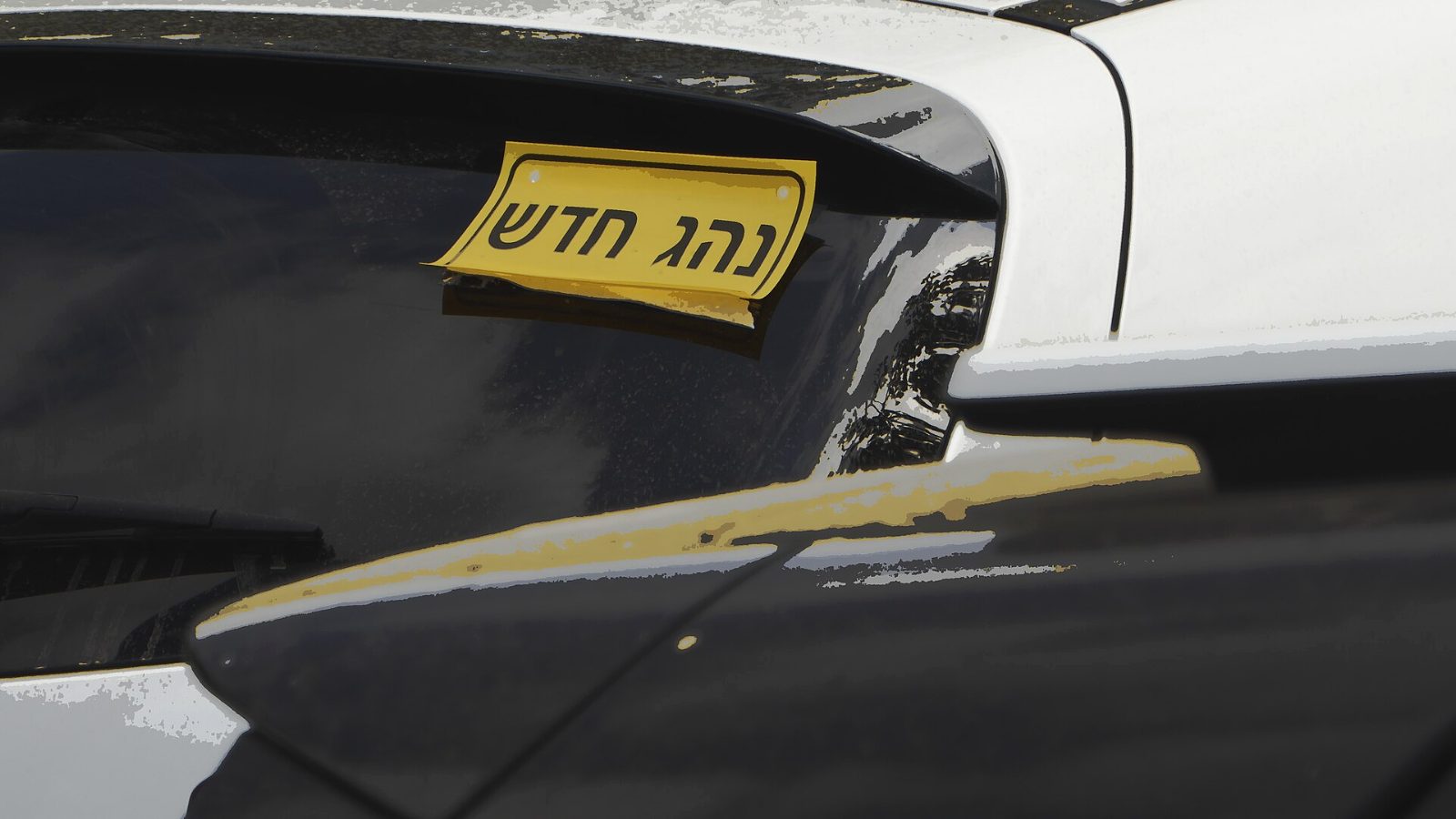
Featured image: New Driver sign in Tel Aviv May 01. Photo: Chenspec (CC BY-SA 4.0), via Wikimedia Commons.